Ford Leverages F1 Engineering and Modular Design to Develop $30,000 Electric Truck
Ford has announced plans to launch an electric vehicle truck in 2026 with a starting price of $30,000, positioning itself to compete with Chinese automakers while maintaining profitability. The automaker is implementing innovative manufacturing approaches including 3D-printed modular components, Formula 1 engineering methodologies, and an internal bounty program to achieve this ambitious target.
This strategic pivot comes after Ford reported a $19.5 billion loss in December 2025 and discontinued production of its battery-electric F-150 Lightning. The company's new affordable EV strategy represents a critical business imperative for the automaker's electric vehicle division.
Clean-Sheet Platform Approach
The initiative began several years ago under the leadership of Alan Clarke, a 12-year Tesla veteran, who established a dedicated skunkworks team. In August, Ford revealed plans to abandon its traditional moving assembly line and invest $2 billion in its Louisville facility to implement a new production system designed to accelerate manufacturing by 15%.
The vehicle lineup will be built on a Universal EV Platform (UEV) featuring single-piece aluminum unicastings and lithium iron phosphate (LFP) battery technology licensed from CATL. The UEV will initially support a midsized truck, with potential expansion to sedans, crossovers, three-row SUVs, and commercial vans.
This marks Ford's first ground-up EV architecture, contrasting with previous models like the Mustang Mach-E and Lightning, which utilized existing infrastructure and manufacturing processes.
Engineering Innovation and Efficiency Metrics
Clarke assembled a specialized team of approximately 450 personnel in Long Beach, California, and 200 in Palo Alto, recruiting talent from Formula 1, Apple, Lucid Motors, Rivian, Tesla, and Auto Motive Power (acquired by Ford in 2023).
The team implemented a bounty program that assigns numerical efficiency metrics to every vehicle aspect, including mass, aerodynamic drag, and individual components. This approach enables cost-benefit analysis where premium components may be justified if they reduce overall vehicle weight and improve efficiency.
For example, the base trim will include power-folding mirrors—typically a premium feature—because they reduce aerodynamic drag. Cost savings were achieved by utilizing a single motor for both mirror adjustment and folding functions.
Aerodynamic Optimization
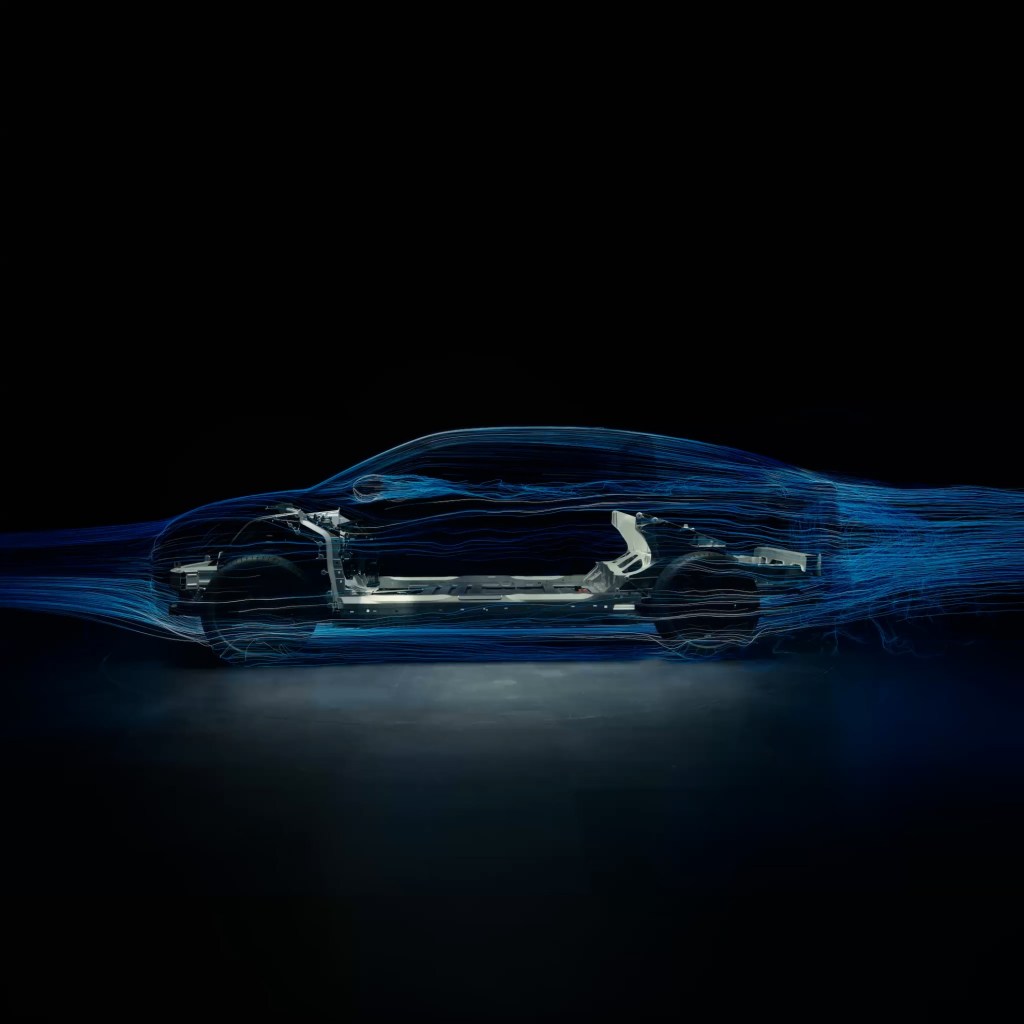
Former Formula 1 engineers collaborated closely with Ford's design team, resulting in a midsized EV truck that is 15% more aerodynamically efficient than any current pickup truck. The team utilized thousands of 3D-printed components with sub-millimeter accuracy in early and frequent wind tunnel testing, departing from Ford's traditional practice of aerodynamic testing only near design completion.
Battery and Powertrain Efficiency
By optimizing vehicle weight and efficiency, Ford can deploy smaller battery packs, addressing the fact that batteries typically represent 40% of EV costs. The resulting vehicle is projected to deliver approximately 15% more range (50 additional miles) compared to equivalent gasoline-powered pickups.
Manufacturing innovations include:
• Aluminum unicasting technology• Migration from 12-volt to 48-volt power systems for vehicle functions
• Zonal electrical architecture reducing electronic control units (ECUs)
• Integration of multiple functions into five main modules
• Wire harness reduction of 4,000 feet and 22 pounds compared to first-generation EVs
Software Integration
According to Luccas Di Tullio, software engineer at Ford, the company consolidated power distribution, battery management, and home backup power functionality into a single module. Ford developed proprietary software for all five main ECUs down to the application layer, providing complete control over vehicle functions beyond infotainment systems.
"Because Ford owns the software to the lowest level, it becomes very portable," Clarke explained. "All of the body controls are directly coupled, enabling experiences that can only be created by integrating sensors throughout the vehicle."
🔔 Stay tuned and subscribe →
Related news
Try these AI tools

Discover how logistics and delivery services integrate with e-commerce, leverage technology, and foc...