Ford Leverages F1 Engineering and Advanced Manufacturing to Develop $30,000 Electric Truck
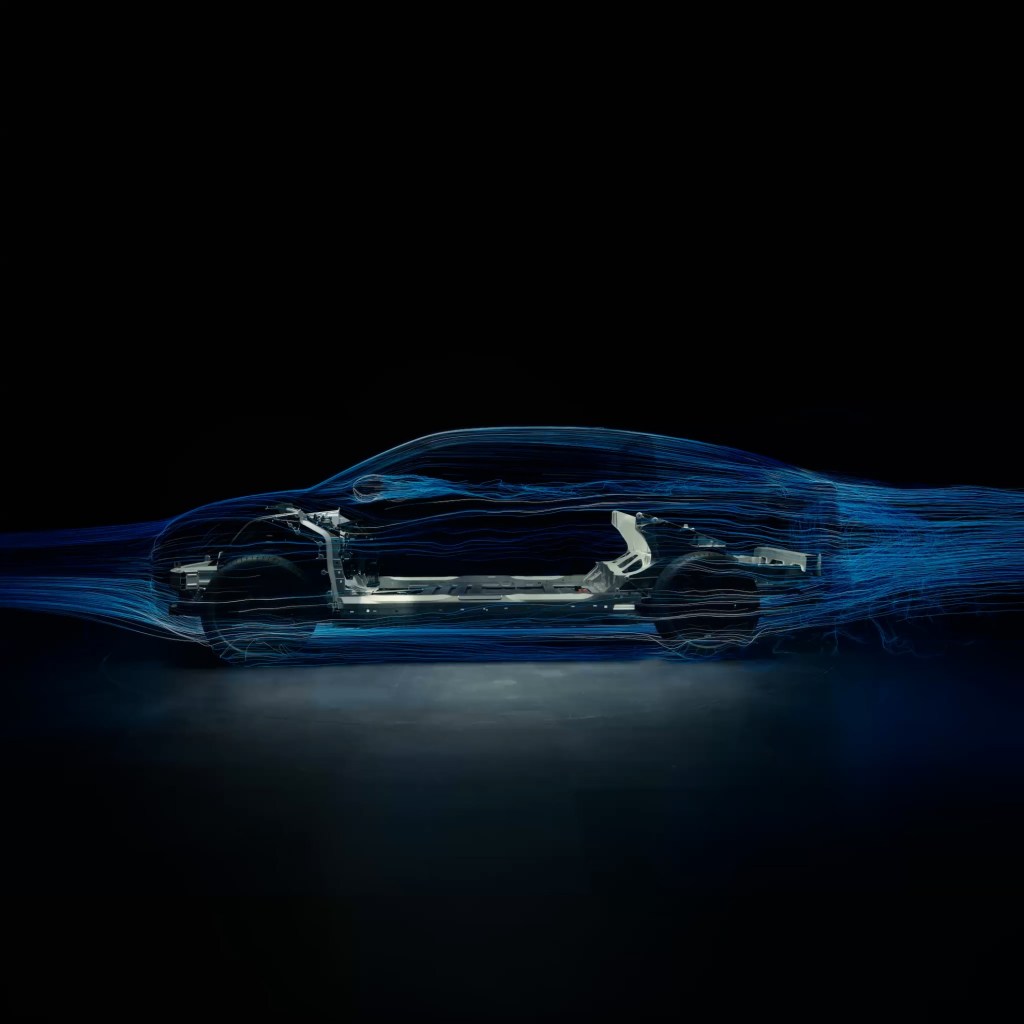
Ford has announced plans to launch an electric vehicle truck in 2026 with a starting price of $30,000, positioning itself to compete with Chinese automakers while maintaining profitability. The automaker revealed that achieving this target will involve innovative manufacturing approaches including 3D-printed modular components, Formula 1 engineering principles, and an internal bounty incentive program.
This strategic pivot comes after Ford reported a $19.5 billion loss in December 2025 and discontinued production of its battery-electric F-150 Lightning, making the success of this new EV business model critical for the company's future.
The affordable EV initiative began several years ago under the leadership of Alan Clarke, a veteran with 12 years of experience at Tesla. Initial details emerged in August 2024, when Ford announced it would abandon its traditional moving assembly line and invest $2 billion in its Louisville facility to implement a new production system designed to accelerate manufacturing by 15%.
The company previously disclosed that its EV lineup would be built on a universal platform featuring single-piece aluminum unicastings—large components cast as single units to reduce part count and enable faster assembly—and lithium iron phosphate (LFP) batteries utilizing technology licensed from China's CATL.
Universal EV Platform (UEV) Architecture
The foundation of Ford's strategy is the Universal EV Platform (UEV), which will initially support a midsized truck before potentially underpinning sedans, crossovers, three-row SUVs, and compact commercial vans. The UEV represents Ford's first ground-up EV design, marking a strategic departure from previous models like the Mustang Mach-E and Lightning, which were built using existing infrastructure and manufacturing processes.
"It's a platform that is built around efficiency," Clarke explained. "It's built around affordability to be able to make long-range electric vehicle travel affordable to more people."
Cross-Industry Talent Acquisition and Bounty Program
To execute this vision, Clarke assembled a team incorporating talent from Formula 1, Apple, Lucid Motors, Rivian, Tesla, and Auto Motive Power (a startup acquired by Ford in 2023). The team comprises approximately 450 personnel at the Long Beach, California headquarters and 200 at a Palo Alto office.
The organization implemented a bounty program to help engineers understand how their decisions impact customer experience and final product quality. This program assigned numerical metrics to every UEV aspect, including:
• Vehicle mass
• Aerodynamic drag
• Individual component specifications
This approach enabled Ford to justify higher-cost components if they contributed to overall weight reduction and improved efficiency. For example, even base trim models will feature power-folding mirrors—typically a premium feature—because they reduce aerodynamic drag. Cost savings were achieved by using a single motor for both mirror adjustment and folding functions.
Formula 1 Engineering Integration
A team of former Formula 1 engineers collaborated closely with Ford's design department, resulting in a midsized EV truck that is 15% more aerodynamically efficient than any current pickup truck on the market.
These engineers utilized 3D-printed and machined components to create modular, Lego-like prototypes for testing. Thousands of 3D-printed parts, accurate to fractions of a millimeter, could be rapidly swapped during wind tunnel testing—a process Ford traditionally reserved for near-final designs. This early and frequent aerodynamic validation enabled continuous optimization throughout development.
Battery and Powertrain Optimization
Given that batteries typically account for approximately 40% of an EV's total cost, Ford prioritized vehicle weight and efficiency to enable smaller battery pack sizes. According to Clarke, the resulting EV truck will deliver approximately 15% more range—roughly 50 additional miles—compared to an equivalent gasoline-powered pickup.
The efficiency-focused approach led Ford to adopt manufacturing techniques popularized by Tesla, including aluminum unicastings and transitioning from a 12-volt to a 48-volt electrical architecture for certain vehicle functions.
Zonal Electrical Architecture
Ford redesigned the UEV's electrical architecture using a zonal approach similar to implementations by Tesla and Rivian. Rather than distributing dozens of electronic control units (ECUs) throughout the vehicle, Ford consolidated multiple functions into five main modules. This architectural change reduces complexity, cost, and copper usage, resulting in a wire harness that is 4,000 feet shorter and 22 pounds lighter compared to first-generation Ford EVs, according to Luccas Di Tullio, a Ford software engineer who previously worked at Auto Motive Power.
Di Tullio explained that the same consolidation philosophy was applied to power electronics, with a single module managing power distribution, battery management, and bidirectional AC power for vehicle-to-home (V2H) functionality during outages.
Ford developed proprietary software for all five main ECUs, extending down to the application layer. This complete software ownership provides portability and enables tight integration between infotainment, body controls, and vehicle sensors, giving Ford direct control over the complete user experience.
While Ford has not yet disclosed specifications such as range, features, or charging times, the company has provided extensive details on its manufacturing and engineering approach to deliver a competitively priced, profitable electric truck to market.
🔔 Stay tuned and subscribe →
Related news


Try these AI tools

Discover Augmentir, a connected worker suite designed to digitize and optimize frontline processes a...

Discover how logistics and delivery services integrate with e-commerce, leverage technology, and foc...