Trump Administration's $11.7B Critical Minerals Reserve Signals Inevitable Shift to Electric Future
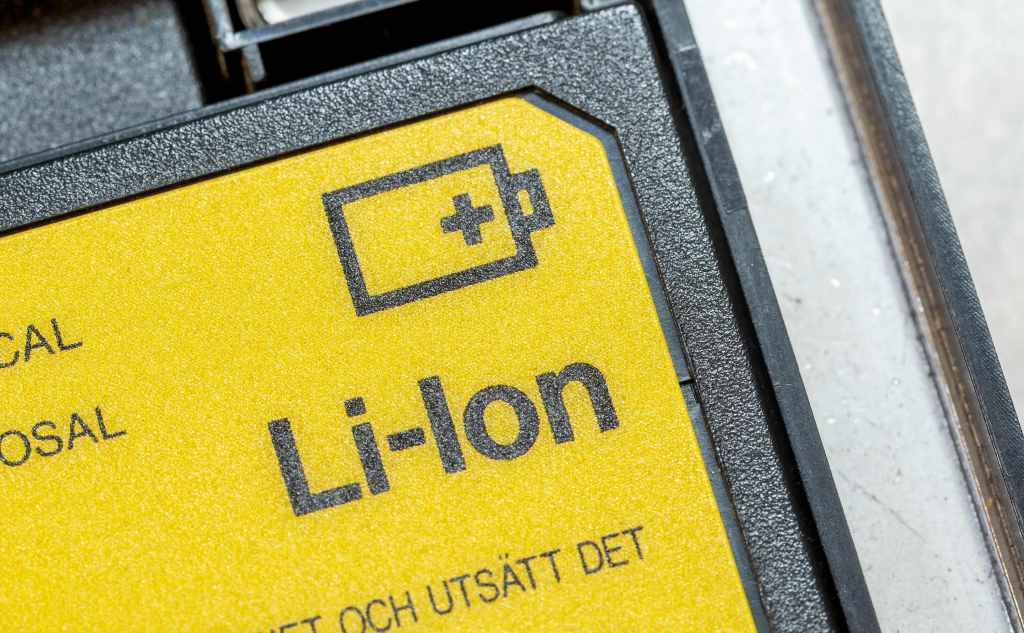
The Trump administration announced this week that the U.S. government will establish an $11.7 billion strategic stockpile of critical minerals, designated as Project Vault. While positioned as a supply chain security initiative, the program represents a significant acknowledgment of the growing dependence on electric technologies across global markets.
The stockpile initiative aims to secure critical mineral supplies for U.S. manufacturers and ensure, according to President Donald Trump, that "American businesses and workers are never harmed by any shortage." This announcement follows recent federal investments in rare earth production infrastructure, including equity positions in USA Rare Earth and MP Materials.
Strategic Response to Supply Chain Vulnerabilities
In his statement, Trump referenced the global market's dependence on China for numerous critical minerals. Over the past year, China has leveraged its dominant market position to counter U.S. tariff policies by restricting exports of rare earth metals and lithium battery materials to the United States. Although China eventually relaxed these restrictions, the episode demonstrated the strategic importance of critical mineral supply chains in modern economies.
Trump compared the new reserve to the Department of Energy's Strategic Petroleum Reserve, established following the oil embargo of the early 1970s. "Just as we have long had a strategic petroleum reserve and a stockpile of critical minerals for national defense, we're now creating this reserve for American industry, so we don't have any problems," Trump stated.
Market Dynamics and Investment Scale
The petroleum reserve's strategic significance has diminished due to increased domestic production capacity and the expanding market share of renewable energy sources. Solar and wind continue to dominate new electric generation capacity deployment, while electric vehicles and plug-in hybrids now represent over 25% of global new vehicle sales.
Specific mineral allocations remain partially undefined, though Bloomberg reports that gallium and cobalt will be included in the reserve. Additional materials such as copper and nickel may also be incorporated, though official confirmation is pending.
The investment magnitude is particularly noteworthy. The U.S. Export-Import Bank is providing a $10 billion loan, with private capital contributing the remainder. This represents approximately half the current value of the Strategic Oil Reserve, allocated to a market that is roughly 1% the size of the global petroleum market—suggesting either significant market growth projections or strategic overinvestment.
Demand Projections and Technology Drivers
Growth in critical mineral demand is primarily driven by clean energy technologies and electric vehicles. According to International Energy Agency (IEA) data:
• More than 50% of global rare earth element demand growth is projected to come from electric vehicles and wind turbines
• For cobalt and lithium, EVs represent the vast majority of demand growth through 2050
• Data center and electronics applications contribute to demand, but at significantly lower rates
Despite the administration's documented skepticism toward clean energy technologies and preference for fossil fuel infrastructure, global markets continue advancing toward solar, wind, and battery storage systems. The establishment of Project Vault demonstrates that market forces and geopolitical realities can supersede policy preferences, effectively acknowledging the inevitable transition to electric technologies across multiple sectors.
Sources:
Wall Street Journal - USA Rare Earth Federal Funding
CNBC - Pentagon Investment in MP Materials
IEA - World Energy Outlook 2025
Ember Energy - Global EV Market Analysis
Bloomberg - Critical Minerals Reserve Analysis
IEA - Critical Minerals Data Explorer
🔔 Stay tuned and subscribe →
Related news


Try these AI tools
Nanonets uses AI to automate workflow in finance, healthcare, logistics, and more. Start for free.

Automate critical supply chain tasks with AI agents by Fynt. Streamline supplier communication and i...

Explore Walmart's strategic expansion into Africa, focusing on localization, supply chain improvemen...