AgriTech Startup Develops Autonomous Solar-Powered Robots to Optimize Fertilizer Application in Corn Farming
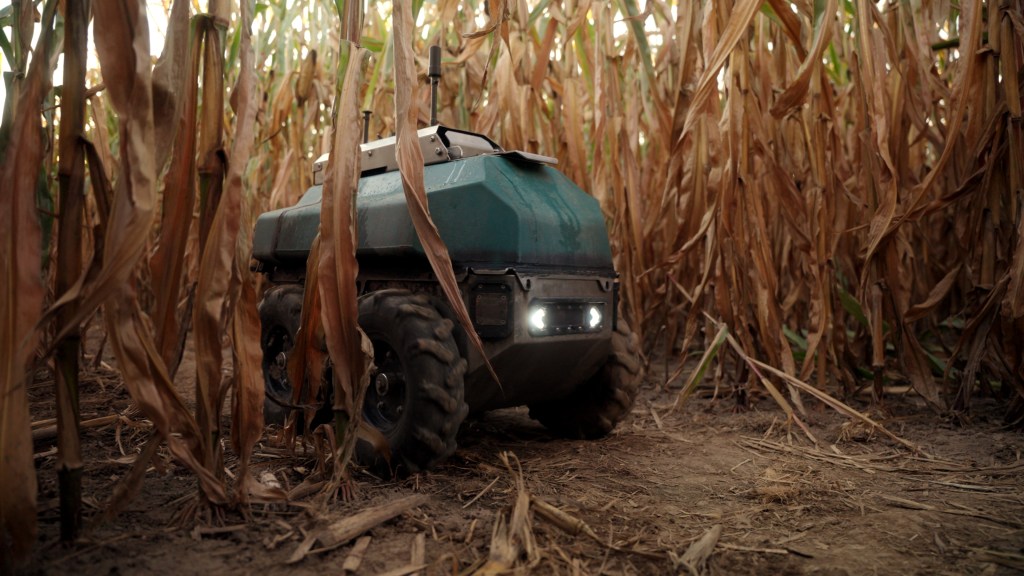
Upside Robotics, a Waterloo, Ontario-based agricultural technology startup, has developed autonomous solar-powered robotic systems designed to optimize fertilizer application in corn cultivation. The company's solution addresses the critical issue of fertilizer waste in industrial agriculture through precision nutrient delivery.
The startup was founded in 2024 by Jana Tian (CEO) and Sam Dugan (CTO), who met at the Entrepreneur First accelerator in 2023. Both founders sought to build a climate-focused venture at the intersection of agriculture and technology. Tian brings chemical engineering experience from Unilever's food division, while Dugan has extensive robotics development expertise.
Technical Implementation
Upside Robotics has engineered lightweight autonomous robots that utilize proprietary algorithmic systems to determine optimal fertilizer application timing and quantities. The platform integrates:
• Real-time weather data analysis
• Soil condition monitoring
• Predictive nutrient requirement modeling
• Solar-powered autonomous navigation systems
The solution specifically targets corn crops, which rank among the most fertilizer-intensive agricultural products. Traditional fertilizer application methods demonstrate only 30% nutrient uptake efficiency, with the majority of applied fertilizer being lost to environmental waste. Conventional farming practices typically involve single-season bulk applications, which fail to address continuous crop nutrient requirements throughout the growing cycle.
Development Methodology
The founding team employed an intensive field-testing approach during their initial development phase. In 2024, Dugan and Tian conducted on-site research by residing in a camper trailer adjacent to test fields, enabling continuous data collection and system iteration.
"We developed our first prototype in two weeks—essentially a remote-controlled platform that allowed us to manually test the fertilization delivery system," Dugan explained. "This approach enabled rapid iteration on both hardware design and agricultural workflow integration."
The hands-on methodology provided critical insights into farming operations and validated product-market fit through direct farmer engagement. The team progressed through four hardware generations, transitioning from manual operation to fully autonomous systems.
Performance Metrics and Scale
Upside Robotics has demonstrated significant operational growth:
• 2024: 70 acres under management (proof of concept)
• 2025: 1,200 acres deployed
• 2026 projection: 3,000+ acres
• Customer retention rate: 100%
The platform has achieved a 70% reduction in fertilizer usage for participating farms, translating to approximately $150 per acre per season in cost savings. These metrics demonstrate both environmental impact and strong unit economics.
Funding and Expansion Strategy
The company recently closed a $7.5 million seed funding round led by Plural, with participation from Garage Capital and Clearpath Robotics founders. Capital allocation priorities include:
1. Continued R&D investment for platform enhancement
2. Production scaling to address demand (200+ farms on waitlist)
3. Geographic expansion into the U.S. corn belt region
"Farmer adoption of agricultural technology is often questioned, but our experience demonstrates strong market receptivity when solutions deliver clear ROI and address genuine operational pain points," Tian noted. "In many cases, farmers actively requested this capability rather than requiring traditional sales efforts."
Market Implications
Upside Robotics' approach represents a growing trend in precision agriculture, where autonomous systems and data-driven decision-making optimize resource utilization while reducing environmental impact. The company's success in achieving customer retention and demonstrating measurable cost savings positions it well within the expanding AgriTech sector.
The platform's focus on reducing fertilizer waste addresses both economic and environmental concerns, as excess agricultural fertilizer contributes significantly to water pollution and greenhouse gas emissions.
🔔 Stay tuned and subscribe →
Related news




Try these AI tools
Amazon SageMaker offers comprehensive tools to streamline building, training, and deploying machine...

Create unique, high-quality music effortlessly with AI-driven Musick.ai. Explore diverse genres with...
Aidaptive's eCommerce AI Platform optimizes conversion rates through predictive, automatic personali...