Flapping Airplanes Raises $180M to Pioneer Data-Efficient AI Training Methods
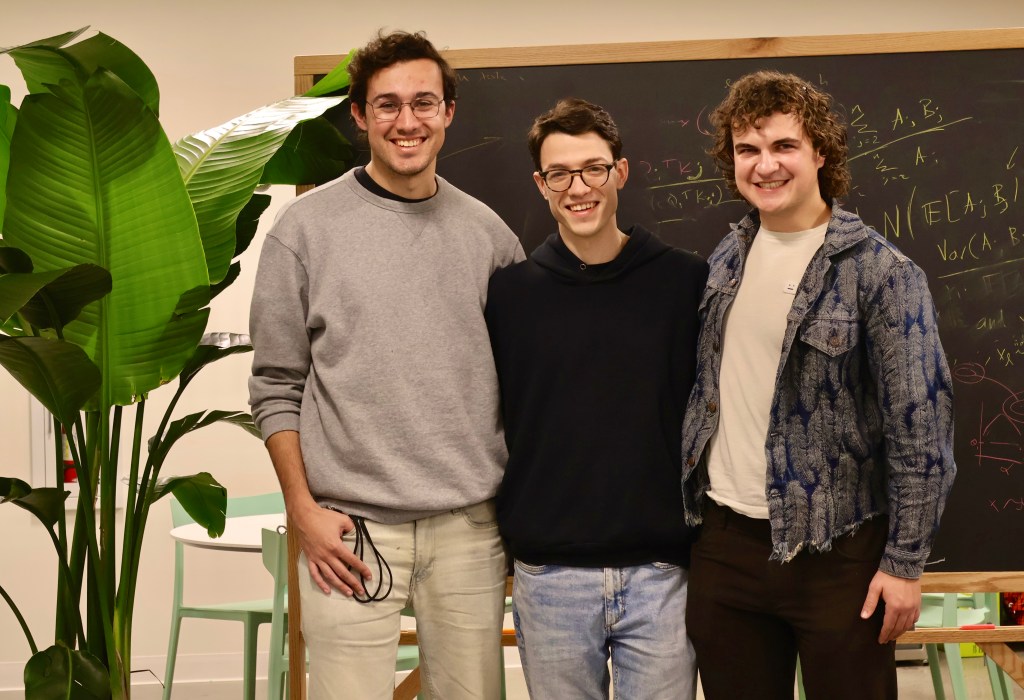
A new AI research lab called Flapping Airplanes has emerged with a distinctive mission: developing radically more data-efficient approaches to training artificial intelligence systems. With $180 million in seed funding, the lab is positioning itself as a research-first organization exploring alternatives to current scaling paradigms that dominate the AI landscape.
The lab is led by three co-founders—brothers Ben and Asher Spector, along with Aidan Smith—who bring unconventional perspectives to fundamental AI research challenges. Their focus centers on addressing what they identify as a critical inefficiency: while frontier models require training on the entirety of human knowledge, biological intelligence operates with significantly less data.
Rethinking AI Training Paradigms
According to Ben Spector, the current state of AI development, while impressive, represents only a fraction of possible approaches. "The advances that we've gotten over the last five to ten years have been spectacular. We love the tools. We use them every day. But the question is, is this the whole universe of things that needs to happen? And we thought about it very carefully and our answer was no, there's a lot more to do," he explains.
The team's approach involves three core hypotheses:
• Data efficiency represents a fundamentally important and underexplored direction for AI research
• Solutions to data efficiency problems will create substantial commercial value and societal benefit
• Creative, unconventional teams can approach these problems with fresh perspectives that established labs may overlook
Brain-Inspired But Not Brain-Limited
Aidan Smith, who previously worked at Neuralink, emphasizes that the human brain serves as an "existence proof" that alternative algorithms exist beyond current transformer architectures. However, the team is careful to distinguish their approach from strict neuromorphic computing.
"We don't really see ourselves as competing with the other labs, because we think that we're looking at just a very different set of problems," Smith notes. "LLMs have an incredible ability to memorize, and draw on this great breadth of knowledge, but they can't really pick up new skills very fast. It takes just rivers and rivers of data to adapt."
The lab's name itself—Flapping Airplanes—encapsulates this philosophy. As Ben Spector explains: "Think of the current systems as big, Boeing 787s. We're not trying to build birds. That's a step too far. We're trying to build some kind of a flapping airplane."
Research-First Commercial Strategy
Unlike many AI startups that balance research with immediate product development, Flapping Airplanes has explicitly prioritized fundamental research in its initial phase. Asher Spector acknowledges the uncertainty inherent in this approach: "I wish I could give you a timeline. I wish I could say, in three years, we're going to have solved the research problem. This is how we're going to commercialize. I can't. We don't know the answers. We're looking for truth."
The founders believe that improved data efficiency could unlock entirely new application domains, particularly in:
• Robotics: Where data collection is inherently constrained
• Scientific discovery: Requiring deep understanding rather than broad memorization
• Enterprise applications: Where domain-specific adaptation currently requires prohibitive amounts of training data
Economic Advantages of Fundamental Research
Interestingly, the team argues that pursuing radical research ideas is actually more cost-effective than incremental improvements to existing architectures. Ben Spector explains: "One of the advantages of doing deep, fundamental research is that, somewhat paradoxically, it is much cheaper to do really crazy, radical ideas than it is to do incremental work. Because when you do incremental work, in order to find out whether or not it does work, you have to go very far up the scaling ladder."
This approach allows the lab to test novel architectures and optimization techniques at smaller scales, only investing in large-scale training once fundamental viability is established.
Unconventional Talent Strategy
Flapping Airplanes has distinguished itself through its hiring approach, actively recruiting exceptionally young researchers, including individuals still in high school or college. The primary criterion is creativity and the ability to think outside established paradigms.
"Probably the number one signal that I'm personally looking for is just like, do they teach me something new when I spend time with them?" says Ben Spector. "If they teach me something new, the odds that they're going to teach us something new about what we're working on is also pretty good."
Aidan Smith adds: "Our team is so exceptionally creative, and every day, I feel really lucky to get to go in and talk about really radical solutions to some of the big problems in AI with people and dream up a very different future."
Vision for AI's Impact
The founders articulate a vision of AI that extends beyond automation and cost reduction. Ben Spector emphasizes: "The most exciting vision of AI is one where there's all kinds of new science and technologies that we can construct that humans aren't smart enough to come up with, but other systems can."
Regarding the broader AGI conversation, the team maintains a measured perspective. Asher Spector notes: "It's clear that capabilities are advancing very quickly. It's clear that there's tremendous amounts of economic value that's being created. I don't think we're very close to God-in-a-box, in my opinion."
Looking Ahead
The lab is targeting 1000x improvements in data efficiency—not incremental gains. As Asher Spector puts it: "We're not trying to make incremental change. And so we should expect the same kind of unknowable, alien changes and capabilities at the limit."
For those interested in engaging with the lab's work or exploring opportunities, Flapping Airplanes maintains open communication channels and actively welcomes both collaboration and constructive criticism from the research community.
Source:
🔔 Stay tuned and subscribe →
Related news




Try these AI tools
Amazon SageMaker offers comprehensive tools to streamline building, training, and deploying machine...

Create unique, high-quality music effortlessly with AI-driven Musick.ai. Explore diverse genres with...

Aidaptive's eCommerce AI Platform optimizes conversion rates through predictive, automatic personali...