Fundamental Secures $255M Series A to Revolutionize Enterprise Structured Data Analysis with Novel Foundation Model
An artificial intelligence research laboratory called Fundamental has officially emerged from stealth mode, unveiling a groundbreaking foundation model designed to address a persistent challenge in enterprise technology: extracting actionable insights from massive volumes of structured data. The company's innovative approach combines traditional predictive AI methodologies with modern machine learning techniques, positioning itself to transform how large-scale organizations analyze their data infrastructure.
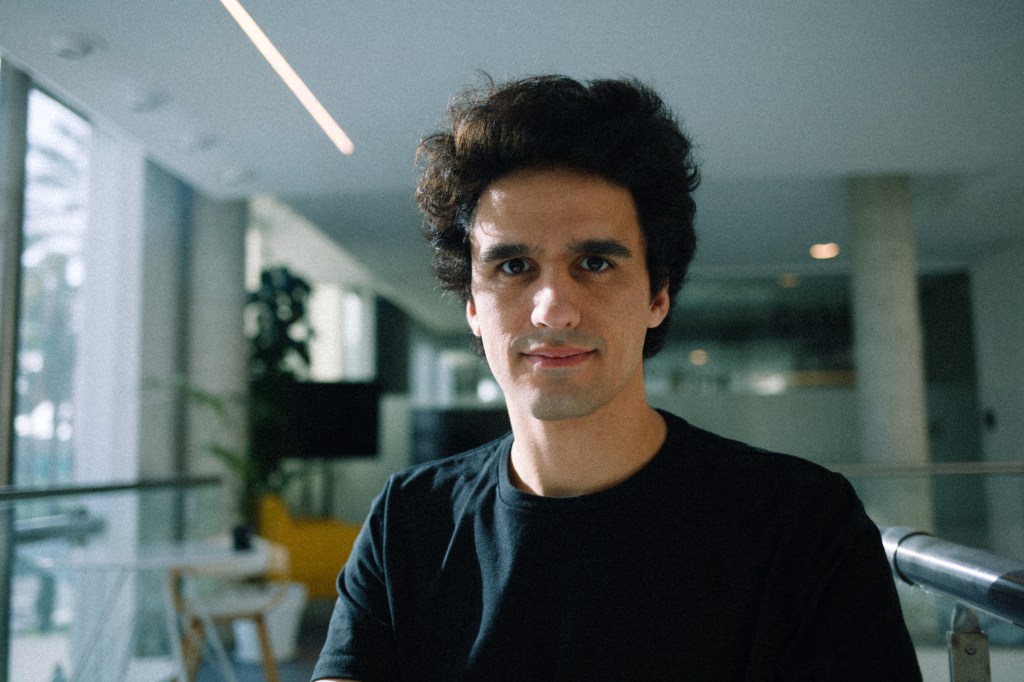
"While LLMs have demonstrated exceptional capabilities in processing unstructured data formats such as text, audio, video, and code, they exhibit significant limitations when handling structured data like tabular formats," explained CEO Jeremy Fraenkel. "Our model, Nexus, represents the most advanced foundation model specifically engineered to process this data type efficiently."
The venture has already garnered substantial investor confidence, launching with $255 million in funding at a $1.2 billion valuation. The majority of this capital comes from a recent $225 million Series A round co-led by Oak HC/FT, Valor Equity Partners, Battery Ventures, and Salesforce Ventures. Hetz Ventures also participated in the Series A, alongside angel investments from notable technology leaders including Perplexity CEO Aravind Srinivas, Brex co-founder Henrique Dubugras, and Datadog CEO Olivier Pomel.
Designated as a Large Tabular Model (LTM) rather than a Large Language Model (LLM), Fundamental's Nexus architecture diverges from contemporary AI paradigms in several critical aspects:
• The model operates deterministically, ensuring consistent outputs for identical queries
• It does not utilize the transformer architecture that characterizes most current AI systems
• Despite following standard pre-training and fine-tuning protocols typical of foundation models, the resulting capabilities differ fundamentally from solutions offered by OpenAI or Anthropic
These architectural distinctions address a specific use case where transformer-based AI models frequently underperform. Due to context window limitations, transformer architectures struggle with reasoning across extremely large datasets—such as spreadsheets containing billions of rows. However, such massive structured datasets are commonplace in enterprise environments, creating a substantial market opportunity for models capable of operating at scale.
According to Fraenkel, this represents a significant competitive advantage: "You can now deploy a single model across all your use cases, dramatically expanding the scope of problems you can address. For each use case, you achieve superior performance compared to what an entire team of data scientists could deliver using conventional methods."
The technology has already attracted multiple high-profile enterprise clients, including seven-figure contracts with Fortune 100 companies. Additionally, Fundamental has established a strategic partnership with AWS, enabling AWS customers to deploy Nexus directly from their existing cloud instances, streamlining integration into enterprise infrastructure.
🔔 Stay tuned and subscribe →
Related news


Try these AI tools
Amazon SageMaker offers comprehensive tools to streamline building, training, and deploying machine...

Create unique, high-quality music effortlessly with AI-driven Musick.ai. Explore diverse genres with...
Aidaptive's eCommerce AI Platform optimizes conversion rates through predictive, automatic personali...