Arcee AI Launches 400B-Parameter Open Source LLM Trinity to Challenge Meta's Llama Dominance
While conventional wisdom suggests that the AI model market has already been consolidated among Big Tech giants like Google, Meta, and Microsoft, along with their preferred partners OpenAI and Anthropic, emerging startup Arcee AI is challenging this narrative with an ambitious new release.
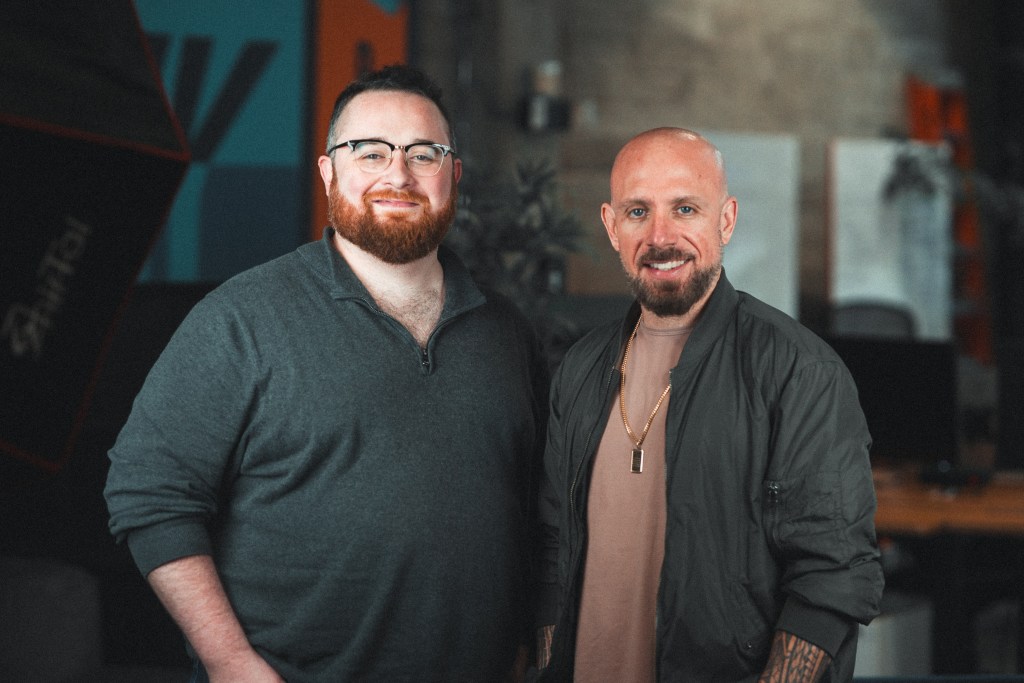
The 30-person company has unveiled Trinity, a fully open-source general-purpose foundation model licensed under Apache 2.0. At 400 billion parameters, Arcee claims Trinity represents one of the largest open-source foundation models ever trained and released by a U.S.-based organization.
Performance Benchmarks and Competitive Positioning
According to benchmark testing conducted on base models with minimal post-training, Trinity demonstrates competitive performance against Meta's Llama 4 Maverick 400B and Z.ai's GLM-4.5, a high-performing open-source model from China's Tsinghua University.
Like other state-of-the-art (SOTA) models, Trinity is optimized for code generation and multi-step processes such as autonomous agents. However, it currently supports only text modalities. CTO Lucas Atkins confirmed that a vision model is under active development, with speech-to-text capabilities planned for the roadmap.
In comparison, Meta's Llama 4 Maverick already offers multi-modal support for both text and images. Nevertheless, Arcee's strategic focus remains on delivering a base LLM that resonates with its primary target audience: developers and academic researchers, particularly those seeking U.S.-based alternatives to Chinese open models.
"Ultimately, the winners of this game, and the only way to really win over the usage, is to have the best open-weight model," Atkins explained. "To win the hearts and minds of developers, you have to give them the best."
Technical Achievement and Resource Efficiency
The Trinity release follows two smaller models launched in December:
• Trinity Mini (26B parameters): A fully post-trained reasoning model for applications ranging from web applications to autonomous agents
• Trinity Nano (6B parameters): An experimental model designed to maximize conversational capabilities within a compact architecture
Remarkably, Arcee trained all three models within a six-month timeframe for approximately $20 million, utilizing 2,048 Nvidia Blackwell B300 GPUs. This represents a significant portion of the company's total funding of approximately $50 million, according to founder and CEO Mark McQuade.
While Atkins acknowledged this budget "pales in comparison" to expenditures by larger AI labs, he emphasized the team's efficiency: "We are a younger startup that's extremely hungry. We have a tremendous amount of talent and bright young researchers who, when given the opportunity to spend this amount of money and train a model of this size, we trusted that they'd rise to the occasion."
Strategic Evolution and Market Positioning
McQuade, previously an early employee at open-source model marketplace Hugging Face, noted that Arcee didn't initially set out to become a U.S. AI lab. The company originally focused on model customization for enterprise clients like SK Telecom, performing post-training on existing open-source models from Llama, Mistral, and Qwen.
However, as the client base expanded, the need for a proprietary model became apparent. Simultaneously, concerns emerged regarding dependency on external providers and the predominance of high-quality open models originating from China, which U.S. enterprises were either hesitant to adopt or legally prohibited from using.
Commitment to True Open Source
A key differentiator for Trinity is its Apache 2.0 license, ensuring permanent open-source availability. This follows Meta CEO Mark Zuckerberg's 2024 indication that the company might not always open-source its most advanced AI models.
"Llama can be looked at as not truly open source as it uses a Meta-controlled license with commercial and usage caveats," Atkins stated. Some open-source organizations have questioned whether Llama qualifies as genuinely open-source compliant.
"Arcee exists because the U.S. needs a permanently open, Apache-licensed, frontier-grade alternative that can actually compete at today's frontier," McQuade emphasized.
Availability and Deployment Options
All Trinity models are available for free download in three configurations:
1. Trinity Large Preview: Lightly post-trained instruct model optimized for following human instructions and general conversational use
2. Trinity Large Base: Base model without post-training
3. TrueBase: Model without any instruct data or post-training, enabling enterprises and researchers to perform custom training without unwinding existing assumptions
Arcee plans to offer a hosted API version with competitive pricing within six weeks as the team continues refining the model's reasoning capabilities. Current API pricing for Trinity Mini is set at $0.045/$0.15, with a rate-limited free tier available. The company continues to offer post-training and customization services alongside its model releases.
🔔 Stay tuned and subscribe →
Related news



Try these AI tools
Tavily Search API: Optimize your AI with efficient, real-time search results. Reduce biases & inaccu...
Discover Pollinations' AI-driven music videos, image feed, and active community. Join us on Discord...
Upscale your images with the µScale app using Replicate AI's advanced model. Sign up now to get 5 fr...