Waymo Secures $16B Series Funding to Accelerate Global Robotaxi Deployment
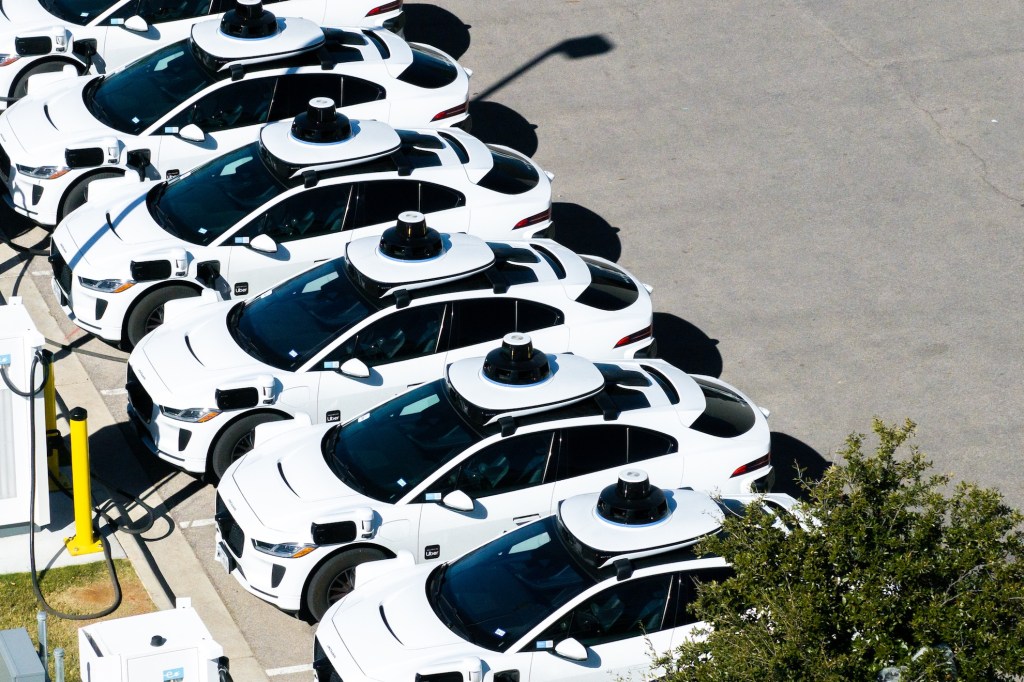
Waymo, Alphabet's autonomous vehicle subsidiary, has successfully closed a $16 billion funding round as the company prepares to scale its driverless taxi operations to over a dozen international markets in 2026, including London and Tokyo.
The investment round was led by Dragoneer Investment Group, DST Global, and Sequoia Capital, bringing Waymo's valuation to $126 billion. Parent company Alphabet participated in the round while maintaining its majority stakeholder position. The funding also included substantial capital injections from Andreessen Horowitz and Mubadala Capital, alongside contributions from Bessemer Venture Partners, Silver Lake, Tiger Global, and T. Rowe Price. Additional participants included BDT & MSD Partners, CapitalG, Fidelity Management & Research Company, GV, Kleiner Perkins, Perry Creek Capital, and Temasek.
The capital will fuel Waymo's aggressive expansion strategy, which has gained significant momentum over the past year. The company recently secured operational rights at San Francisco International Airport and has extended its robotaxi service throughout Northern California and multiple major U.S. metropolitan areas, including Los Angeles, Austin, and Miami.
Evolution from R&D to Commercial Scale
Originally developed as Google's self-driving car project, Waymo spent years conducting controlled testing on public roads in Silicon Valley and the Bay Area. The company's first major geographic expansion occurred in 2016 when it initiated testing in Phoenix, which eventually became the launch market for its fully driverless operations after removing human safety drivers from vehicles. Phoenix marked Waymo's inaugural commercial robotaxi deployment, utilizing Chrysler Pacifica minivans.
The company's growth trajectory accelerated significantly in August 2023 following regulatory approval to operate commercial robotaxi services in California. Waymo launched limited operations in San Francisco before expanding throughout the greater Bay Area, Silicon Valley, and the regional freeway network. Subsequent market entries included Los Angeles, followed by Austin and Atlanta through a strategic partnership with Uber in 2025. The company initiated Miami operations in early 2026.
Operational Metrics and Performance
This geographic expansion has translated into substantial operational scale:
• 400,000 rides per week across six major U.S. metropolitan areas
• 15 million rides completed in 2025 alone, representing a 3x year-over-year increase
• 20+ million lifetime rides to date
According to the company's official statement: "We are no longer proving a concept. We are scaling a commercial reality, laying the groundwork for ride-hailing operations in over 20 additional cities in 2026, including Tokyo and London."
Regulatory Challenges and Safety Incidents
The rapid deployment has attracted increased regulatory oversight following several operational incidents. Waymo's autonomous vehicles have exhibited problematic behaviors, particularly in school zones, prompting investigations by multiple federal agencies.
The National Highway Traffic Safety Administration's Office of Defects Investigation and the National Transportation Safety Board (NTSB) have launched inquiries into illegal behaviors exhibited by Waymo robotaxis around school buses. NHTSA initiated an additional investigation following an incident where a Waymo vehicle struck a child near an elementary school in Santa Monica at approximately 6 mph, resulting in minor injuries.
Sources:
Waymo Official Blog Post