Pacific Fusion Achieves Breakthrough in Cost-Effective Fusion Reactor Technology

The fusion energy sector continues to grapple with its fundamental economic challenge: ensuring that the energy input required to initiate fusion reactions remains economically viable compared to the market value of generated power. While various companies pursue different technological approaches, none have yet achieved commercial viability.
Commonwealth Fusion Systems, for instance, is currently constructing a multi-hundred-million-dollar reactor facility, though operational testing has been postponed until next year. Meanwhile, newer entrants to the market believe they can develop more cost-effective solutions.
Pacific Fusion's Experimental Breakthrough
Pacific Fusion has announced significant results from a series of experiments conducted at Sandia National Laboratory, demonstrating a methodology that could eliminate several expensive components from their fusion reactor design. The company's approach promises to generate continuous baseload electricity compatible with existing grid infrastructure, with commercial deployment targeted for the early-to-mid 2030s.
Technical Approach: Pulser-Driven Inertial Confinement Fusion
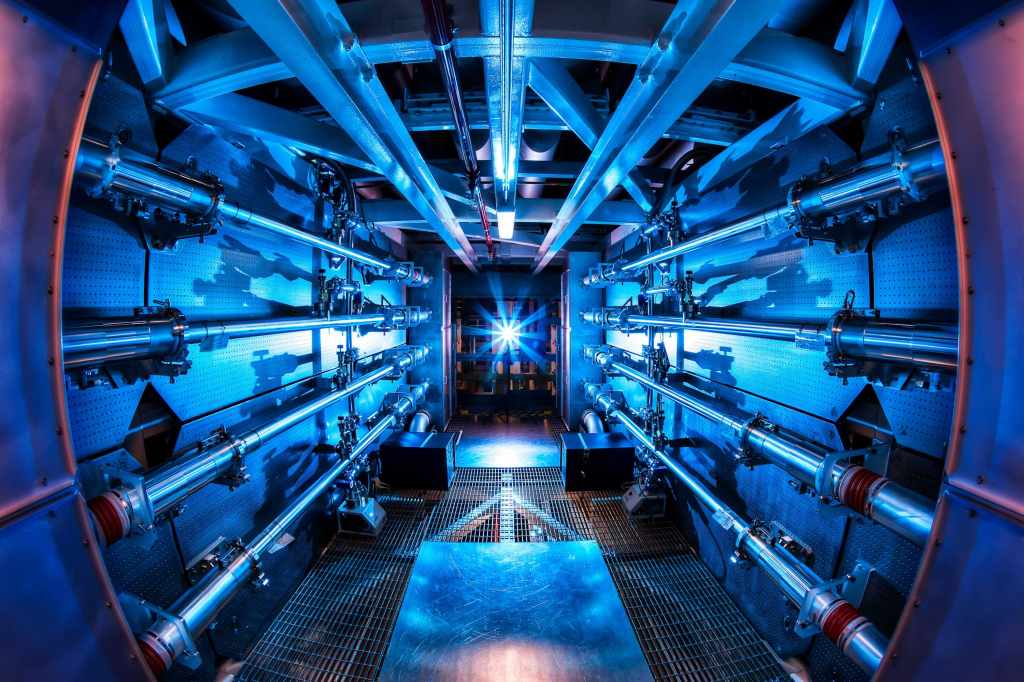
The company is developing a pulser-driven inertial confinement fusion (ICF) system, conceptually similar to experiments conducted at the National Ignition Facility (NIF). The process involves rapid compression of fuel pellets to achieve atomic fusion and energy release.
However, Pacific Fusion's implementation differs significantly from NIF's laser-based approach. The company utilizes high-intensity electrical pulses to generate magnetic fields that compress fuel pellets—approximately the size of a pencil eraser—in under 100 nanoseconds.
"The faster you can implode it, the hotter it'll get," explained Keith LeChien, co-founder and CTO of Pacific Fusion.
Eliminating Pre-heating Requirements
Traditional pulser-driven ICF systems have required preliminary heating through lasers and magnets, typically contributing 5-10% of total energy input. These auxiliary systems introduce substantial upfront costs, operational complexity, and maintenance overhead, negatively impacting the economic viability of fusion power generation.
Pacific Fusion's Sandia experiments focused on optimizing the design of the fuel pellet encasement and modulating electrical current delivery. By allowing controlled magnetic field penetration prior to the primary compression pulse, the team achieved necessary pre-heating without additional systems.
"We can make very subtle changes to how this cylinder is manufactured that allow the magnetic field to leak or to seep into the fuel before it's compressed," LeChien noted.
Manufacturing Implementation
The fuel assembly consists of plastic targets wrapped in aluminum. By varying aluminum thickness, engineers can precisely control magnetic field penetration. The required manufacturing precision is comparable to .22 caliber ammunition casing production—a well-established industrial process with over a century of refinement.
The energy overhead for this magnetic field pre-heating approach is negligible, representing less than 1% of total system energy—effectively undetectable in overall system performance.
Economic and Operational Impact
Eliminating the magnetic pre-heating system would streamline operational complexity and reduce maintenance requirements, providing modest cost benefits. However, removing the laser system represents a substantial economic advantage, as the required laser infrastructure for high-gain pre-heating systems exceeds $100 million.
Validation and Simulation Refinement
These experiments also serve to validate and refine the company's computational models, ensuring alignment between theoretical predictions and empirical results.
"A lot of people have simulated things and said, 'Oh, this will work or that will work.' It's a very different game to simulate something, build it, test it, and have it work. Closing that loop is hard," LeChien emphasized.
🔔 Stay tuned and subscribe →
Related news
Try these AI tools
Join Iris.ai to revolutionize your R&D processes with AI tools like RSpace™. Secure, innovative, and...