The Rise of Personal Conglomerates: Analyzing Elon Musk's Multi-Industry Empire
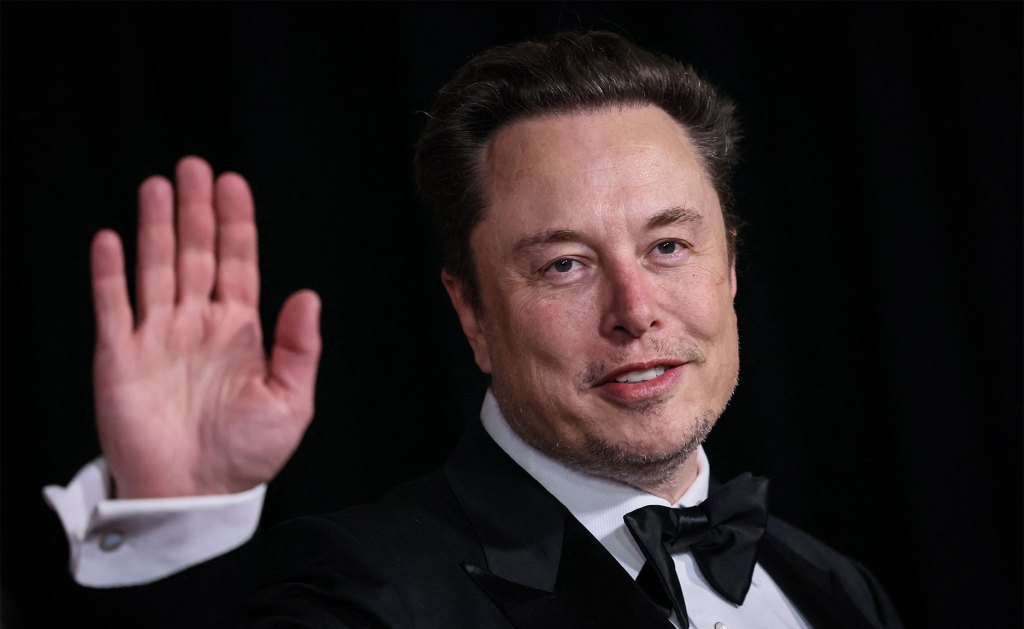
The corporate landscape is witnessing a fundamental shift from traditional conglomerates to personal conglomerates controlled by individual tech magnates. While aerospace, energy, healthcare, mobility, and media sectors were once dominated by corporations like General Electric, today these industries are increasingly influenced by figures like Elon Musk.
Musk currently serves as CEO of Tesla, xAI, and SpaceX (which owns telecommunications subsidiary Starlink), owns social media platform X, and oversees ventures in neural interface technology through Neuralink and infrastructure development via The Boring Company. Recent reports indicate he has invested at least $10 million in fertility research initiatives.
Strategic Consolidation and Historical Parallels
Recent developments suggest Musk is exploring the merger of several ventures into a unified conglomerate structure. While comparisons to Henry Ford are common, more accurate historical parallels might be drawn to John D. Rockefeller or Jack Welch, who transformed GE from a struggling industrial manufacturer into a diversified conglomerate.
The distinction between corporate and personal entities becomes increasingly ambiguous when considering that Musk's net worth—approaching $800 billion—exceeds the market capitalization of 97% of S&P 500 companies. This figure rivals GE's peak valuation when adjusted for inflation.
The GE Conglomerate Model
At its zenith, GE became inseparable from Chairman Jack Welch's leadership. Similarly, Musk's influence permeates modern executive culture, with contemporary leaders adopting concepts like "hardcore" work ethics and "first-principles thinking," mirroring how 1980s CEOs emulated Welch's strategies of accretive mergers and workforce restructuring.
Musk's current portfolio spans:
• Tesla (automotive and energy)• SpaceX (aerospace and telecommunications)
• xAI (artificial intelligence, integrated with X)
• Neuralink (neural interface technology)
• The Boring Company (infrastructure)
While these entities have maintained operational independence, recent cross-investments by Tesla and SpaceX into xAI signal increasing integration. Existing synergies include Tesla vehicles utilizing Boring Company tunnels, xAI's Grok integration in Tesla vehicles, and Tesla Megapack battery deployments at xAI data centers.
Historical Context: The Welch Era
When Welch assumed GE's leadership in 1981, the company had lost approximately 20% of its market capitalization over the preceding decade. His restructuring strategy involved significant workforce reduction—over 100,000 employees in the initial years—earning him the moniker "Neutron Jack."
The capital freed through these measures funded an aggressive acquisition strategy. While many acquisitions aligned with GE's manufacturing core, others like NBC (acquired 1986) were pursued for strategic influence expansion.
Under Welch's tenure, GE's valuation grew from $14 billion to over $400 billion by 2001, establishing the company's management training program as equivalent to premier business schools. However, structural vulnerabilities emerged during the 2008 financial crisis, revealing that GE Capital's profits had obscured underperformance in other divisions. The subsidiary ultimately required $139 billion in federal assistance, leading to GE's eventual dissolution into three separate entities five years ago.
The Robber Baron Comparison
According to David Yoffie, Professor at Harvard Business School, Musk's approach more closely resembles Gilded Age industrialists like J.P. Morgan and John D. Rockefeller than modern conglomerates. These figures wielded control through direct ownership and board influence, building foundational industries like railroads and petroleum.
"It's much more about ego, market power, and trying to be the kingmaker," Yoffie noted, highlighting that Musk's wealth as a percentage of U.S. GDP approximates Rockefeller's historical concentration.
A critical distinction lies in regulatory frameworks. While the Gilded Age operated with minimal oversight, contemporary markets face substantial regulation—though current deregulatory trends may reduce these constraints. Musk has invested over $300 million in electoral influence campaigns domestically and internationally, mirroring historical precedents of wealth-driven political engagement.
Conglomerate Economics and Future Constraints
Modern conglomerates emerged as risk-hedging mechanisms, offering investors exposure to counter-cyclical businesses through single equity positions. However, this model has been largely discredited, as specialized companies typically deliver superior returns through operational efficiency.
Conglomerate structures also introduce valuation opacity, resulting in what financial analysts term the "conglomerate discount"—a market devaluation reflecting the difficulty in accurately assessing constituent business values.
The primary constraint on Musk's expanding influence may ultimately be regulatory intervention driven by public sentiment. Just as Progressive Era reforms curtailed Gilded Age tycoons' power, contemporary regulatory frameworks could impose similar limitations.
While Musk has demonstrated exceptional ability to translate visionary concepts into viable business models, the sustainability of his multi-industry empire remains an open question as both market dynamics and societal responses continue to evolve.
🔔 Stay tuned and subscribe →
Related news



Try these AI tools

Elon Musk discusses the future of a civilization on Mars, highlighting reusable rockets and governan...