World Labs Secures $200M Strategic Investment from Autodesk to Integrate AI World Models into 3D Design Workflows
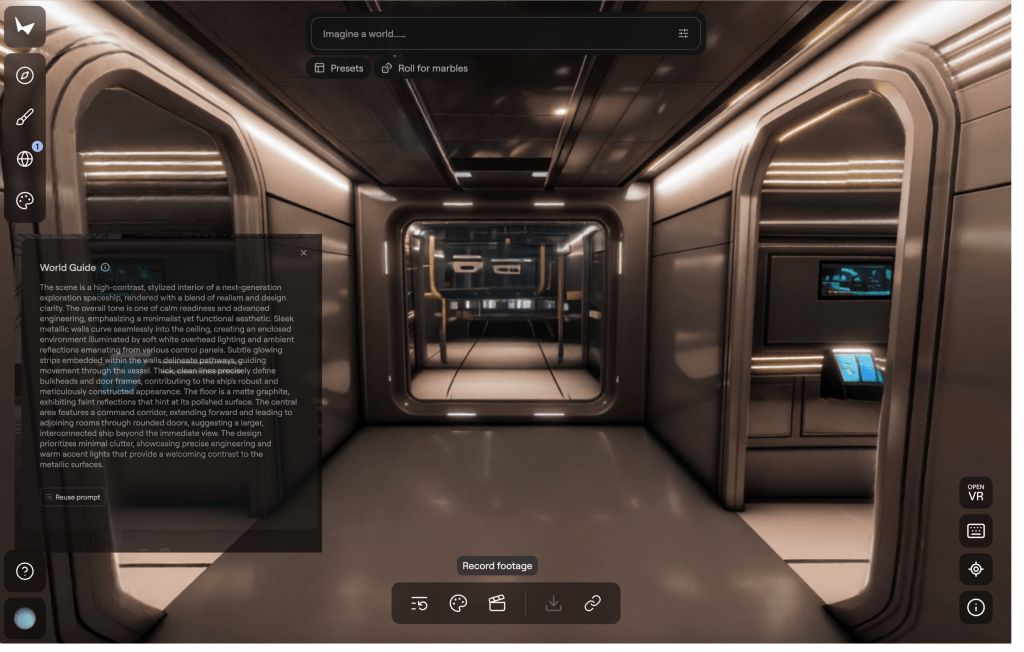
World Labs, the AI startup founded by Fei-Fei Li, has secured a $200 million strategic investment from Autodesk, the leading software design and 3D CAD solutions provider. This partnership aims to explore the integration of World Labs' world models—advanced AI systems capable of generating and reasoning about immersive 3D environments—with Autodesk's industry-standard design tools, with an initial focus on entertainment and media applications.
According to Autodesk, this investment represents a portion of a larger funding round for World Labs, though additional details remain undisclosed. The startup, which emerged from stealth in 2024 with $230 million in funding at a $1 billion valuation, is reportedly in discussions to raise additional capital at a $5 billion valuation.
Commercial Validation for World Models
For World Labs, Autodesk's investment validates the commercial viability of its technology. The company's flagship product, Marble, launched in November 2025, enables users to create editable and downloadable 3D environments through AI-powered generation. This capability aligns strategically with Autodesk's core business in architectural, engineering, construction, manufacturing, and entertainment workflows.
As Li stated: "Autodesk has long helped people think spatially and solve real-world problems and, together, we share a clear purpose: building physical AI that augments human creativity and puts more powerful tools in the hands of designers, builders, and creators."
Research Collaboration and Technical Integration
Under the partnership agreement, Autodesk will serve as an advisor to World Labs, with both companies collaborating at the research and model development level. Daron Green, Autodesk's Chief Scientist, indicated that the partnership is still in its early stages, with the precise integration architecture yet to be determined.
"You could anticipate us consuming their models or them consuming our models in different settings," Green explained. He outlined potential use cases where designers might begin with a world-model-based sketch in World Labs (such as an office layout) and then leverage Autodesk's tools for detailed component design. Conversely, objects designed in Autodesk's platform could be placed into contextual environments generated through World Labs' AI prompts.
Green emphasized that data sharing is not part of the agreement, addressing potential concerns about proprietary information exchange.
Initial Focus on Media and Entertainment
The partnership will initially target media and entertainment use cases, following the go-to-market strategy adopted by most world model developers, including Google DeepMind and Runway. Autodesk already maintains relationships with major media production companies and has been developing models for character animation.
"These are close to world models," Green noted. "They're a characterization of an animal in the world that's responding to physical constraints like time, maybe a terrain it needs to traverse. So there's a physical understanding in the model, and you can see how that might be combined. You're not just animating the dog, but you're giving it a world within which it can now interact."
Strategic Alignment with Neural CAD Development
This partnership supports Autodesk's broader AI integration strategy across its software portfolio. The company is developing "neural CAD," a new category of generative AI models trained on geometric data that can reason about components and entire systems. Unlike image generators, neural CAD can produce functional 3D models with an understanding of real-world physical constraints and operational requirements.
Autodesk's neural CAD models are already being integrated into the company's product design and architecture solutions as part of its advanced spatial intelligence roadmap. World Labs' technology could extend this capability beyond individual design files toward comprehensive digital representations of physical environments.
Green envisions a future where multiple AI systems—including large language models, world models, and neural CAD—are combined to enhance design outcomes for Autodesk's customer base.
"If AI is to be truly useful, it must understand worlds, not just words," Li emphasized. "Worlds are governed by geometry, physics, and dynamics, and reconciling the semantic, spatial, and physical is the next great frontier of AI."
🔔 Stay tuned and subscribe →
Related news




Try these AI tools

Caspa AI uses generative AI to create professional and realistic product photos in minutes, boosting...

Transform standard QR codes into captivating works of art using QR Diffusion's generative AI technol...

SAP HANA Cloud: A versatile multi-model database management system offering scalability, security, a...