Meta's Internal Research Reveals Parental Controls Ineffective Against Teen Social Media Addiction

An internal research initiative at Meta, designated "Project MYST" (Meta and Youth Social Emotional Trends survey), conducted in collaboration with the University of Chicago, has revealed that parental supervision mechanisms and control features—including time restrictions and access limitations—demonstrate minimal effectiveness in mitigating compulsive social media usage among adolescents.
The study further identified that teenagers experiencing adverse life events exhibited significantly reduced capacity to self-regulate their social media consumption patterns. These findings emerged during testimony in the ongoing social media addiction litigation that commenced in Los Angeles County Superior Court.
Case Overview
The plaintiff, identified as "KGM" or "Kaley," together with her mother and additional co-plaintiffs, has filed suit against multiple social media platforms, alleging that these companies engineered "addictive and dangerous" products that resulted in users developing anxiety disorders, depression, body dysmorphia, eating disorders, self-harm behaviors, and suicidal ideation.
The litigation initially named Meta, YouTube, ByteDance (TikTok), and Snap as defendants. However, both Snap and TikTok reached settlements prior to trial commencement. This case represents one of several landmark proceedings scheduled for this year that could fundamentally reshape how social media companies approach youth user protection and potentially trigger enhanced regulatory intervention.
Key Research Findings
During the jury trial, plaintiff's counsel Mark Lanier referenced Project MYST, asserting that Meta possessed knowledge of specific harms but failed to disclose these findings publicly. The research, based on survey data from 1,000 teenagers and their parents, concluded that:
• "Parental and household factors have little association with teens' reported levels of attentiveness to their social media use"
• Both parental and adolescent respondents demonstrated agreement that "there is no association between either parental reports or teen reports of parental supervision, and teens' survey measures of attentiveness or capability"
If validated, these findings suggest that built-in parental control features within applications like Instagram, as well as device-level time restrictions, may not effectively reduce adolescent propensity for compulsive social media engagement.
Platform Design Allegations
The complaint alleges that social media platforms exploit young users through multiple design defects:
• Algorithmic content feeds engineered to maximize scrolling behavior
• Intermittent variable reward mechanisms that manipulate dopamine delivery systems
• Persistent notification strategies
• Inadequate parental control implementations
Executive Testimony
Instagram head Adam Mosseri testified that he could not recall specific details about Project MYST, despite documentation suggesting he had authorized the study's continuation. When questioned, Mosseri stated, "We do a lot of research projects," claiming he remembered only the project designation.
The research also identified a correlation between adverse life experiences and diminished self-regulation capabilities. Adolescents facing challenges such as parental substance abuse or school-based harassment reported lower attentiveness to their social media consumption patterns, suggesting that trauma-affected youth face elevated addiction risk.
Mosseri partially acknowledged this correlation, noting: "There's a variety of reasons this can be the case. One I've heard often is that people use Instagram as a way to escape from a more difficult reality."
Terminology and Defense Strategy
Meta deliberately avoids characterizing excessive usage as "addiction," instead employing the term "problematic use" to describe users "spending more time on Instagram than they feel good about."
Defense counsel for Meta argued that Project MYST focused narrowly on adolescent perceptions of their usage levels rather than clinical addiction assessment. The defense strategy emphasizes parental responsibility and external life circumstances as primary factors contributing to negative emotional states, rather than platform design characteristics.
Meta's legal team highlighted that the plaintiff experienced parental divorce, paternal abuse, and school-based bullying as contextual factors.
Disclosure Status
Significantly, Mosseri confirmed that Project MYST findings were never published publicly, and no advisories were issued to adolescent users or parents based on the research outcomes.
The jury's interpretation of studies like Project MYST and related testimony will determine the case outcome, potentially establishing precedent for social media platform accountability regarding youth mental health impacts.
Sources:
University of Chicago NORC
CNN Coverage of Social Media Trial
Tech Oversight - Adam Mosseri Testimony Analysis
🔔 Stay tuned and subscribe →
Related news



Try these AI tools

Optimize ad campaigns with AI-driven CampaignBuilder.AI. User-friendly automation for cross-platform...

Discover Meta AI: an intelligent assistant for learning, creativity, and social connections, availab...
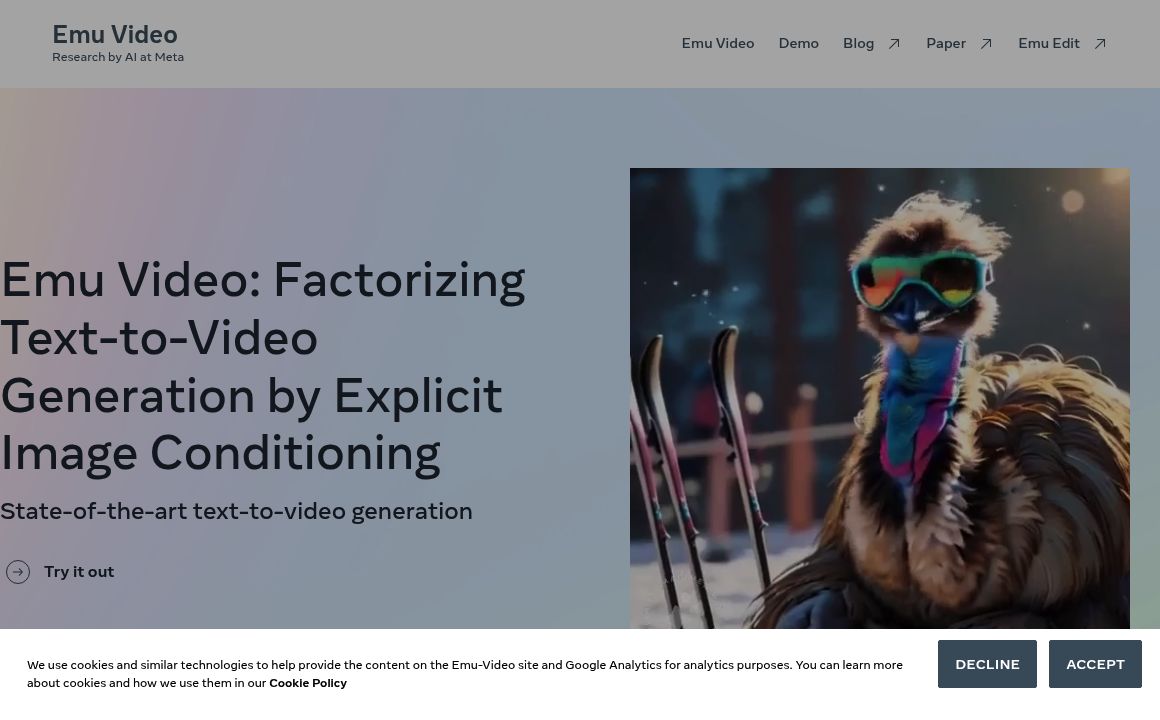
Discover Emu Video: innovative text-to-video generation using diffusion models for producing high-qu...