Inside Andreessen Horowitz's Speedrun Accelerator: Strategies for Navigating the Sub-1% Acceptance Rate
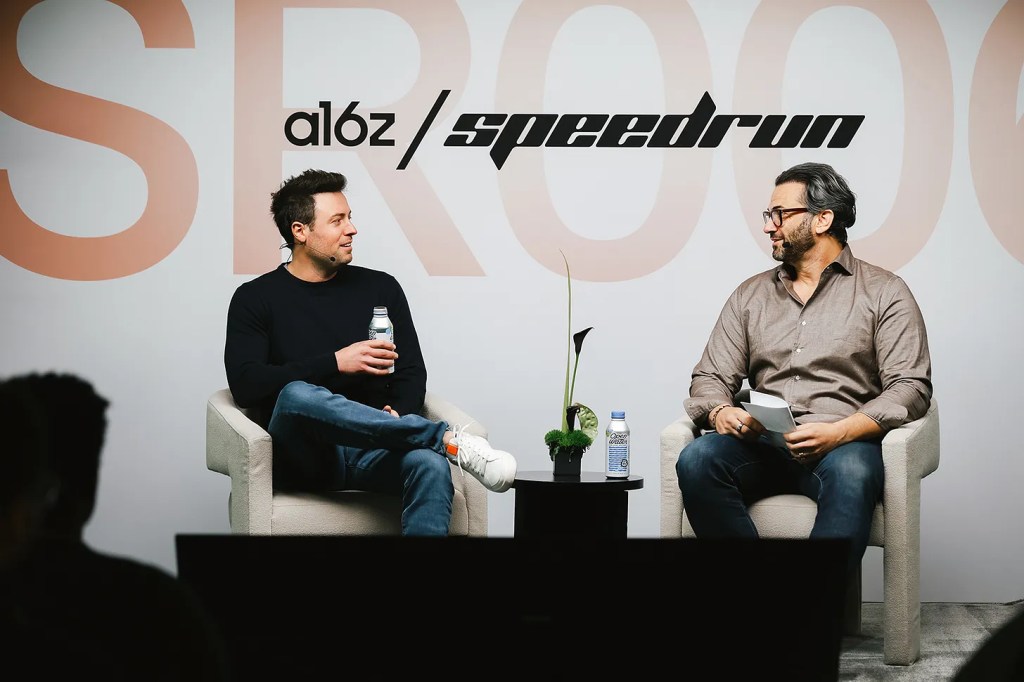
Andreessen Horowitz's Speedrun accelerator program has rapidly emerged as one of the most competitive startup incubation platforms in the technology ecosystem. Launched in 2023, the program maintains an acceptance rate of less than 1%, with recent cohort data revealing that over 19,000 startups applied, resulting in fewer than 0.4% being admitted.
According to Joshua Lu, General Manager of the program and Partner at a16z, Speedrun has evolved from its initial focus on gaming startups to encompass entertainment and media, ultimately transitioning into a horizontal program accepting founders across all technology verticals. The 12-week intensive program operates exclusively in San Francisco, having consolidated operations from its previous Los Angeles location.
Program Structure and Investment Terms
Speedrun operates two annual cohorts, each accepting between 50 and 70 startups. The investment structure includes up to $1 million per company, distributed as follows:
• Initial investment: $500,000 for 10% equity via SAFE note
• Conditional follow-on: Additional $500,000 if subsequent funding round closes within 18 months, matching investor terms
While the equity stake is higher compared to Y Combinator's standard 7% for $500,000, Speedrun justifies the premium through comprehensive value-added services including:
• Access to a16z's extensive advisory network
• Go-to-market strategy support
• Brand development and media strategy consultation
• Talent acquisition resources
• $5 million in vendor credits (AWS, OpenAI, Nvidia, Deel)
Key Selection Criteria: Founding Team Composition
Lu emphasizes that for early-stage ventures, founding team dynamics represent the critical evaluation factor. The program seeks complementary skill sets without prescriptive role definitions, prioritizing teams that demonstrate:
• Self-awareness regarding capability gaps
• Strategic hiring plans addressing identified deficiencies
• Shared working history or established collaborative patterns
• Proven conflict resolution mechanisms
"We want the founding team to be self-aware and for that to be part of the hiring plan," Lu stated. Teams with prior collaboration experience demonstrate enhanced pattern recognition and navigational capabilities through startup challenges.
Technical Proficiency in the AI Era
Despite AI-driven reductions in software development barriers, technical competency remains highly valued. However, the accessibility of AI tooling has elevated expectations: programs now anticipate applicants will demonstrate preliminary market validation or traction before application.
"Speedrun as a program is really great at helping teams pour gasoline on a very small spark or fire," Lu explained. "We look for teams that have endeavored to build and try to show us that there's a little spark we can fan the flames on."
Application Best Practices
Avoid Excessive Market Theory
Lu identifies a common pitfall: founders dedicating disproportionate application space to market analysis and problem validation. Given the unpredictable trajectory of even successful technology companies, the program prioritizes:
1. Founding team excellence and cohesion
2. Team-problem fit articulation
3. Concrete validation metrics
Strategic AI Utilization
While AI assistance for grammar correction and content refinement is encouraged, over-reliance creates vulnerabilities during live interview rounds. Approximately 10% of applicants advance to video interviews, where authentic articulation capabilities are evaluated by panels of 2-3 investors.
Maximizing Program Value
Lu emphasizes that optimal outcomes correlate with proactive engagement. With a16z's 600-person organization comprising 90% operational support staff (versus investment professionals), founders gain access to specialized expertise across marketing, finance, management, and technical domains.
"What you get out of Speedrun is what you put into it," Lu noted. "We think founders who want to take advantage of world experts in many different domains early in their startup journey would be really smart to choose us."
Founder Perspective: Smart Bricks Case Study
Mohamed Mohamed, founder of proptech startup Smart Bricks, recently announced a $5 million pre-seed round led by a16z Speedrun. His application strategy emphasized:
• Treating the submission as an internal strategy document rather than marketing collateral
• Prioritizing clarity over buzzword optimization
• Transparent acknowledgment of current challenges and support requirements
• Precise articulation of problem significance
"Speedrun isn't looking for perfect companies; they're looking for founders who can reason clearly about complex problems and build with conviction," Mohamed advised. "Depth beats polish every time."
The selection process involved technical deep-dives into product architecture, data strategy, and long-term vision, resembling partner-level strategic discussions rather than conventional accelerator screenings.
Application Timeline
The current cohort, which commenced in January, concludes in April with Demo Day. Applications for the subsequent cohort open in April, though the program maintains year-round rolling admissions for exceptional candidates.
🔔 Stay tuned and subscribe →
Related news



Try these AI tools
Discover how Brainfish uses AI to transform customer experience. Book a personalized demo today.
Discover Tommy Jepsen's impactful work in product design and development, including his role at Weld...
Discover unique business names with Branition's AI-powered generator, capable of smart filtering and...