OpenAI Releases Native MacOS Application for Agentic Code Development
Artificial intelligence is fundamentally transforming software development workflows, with AI-powered agents increasingly handling substantial portions of programming tasks. As developers explore novel interfaces and collaboration paradigms for human-AI interaction, even leading AI research organizations face challenges in maintaining competitive feature parity.
The current industry trajectory emphasizes agentic software development — autonomous AI systems capable of independently executing coding tasks — exemplified by solutions such as Claude Code and Cowork applications. OpenAI has been incrementally enhancing its Codex toolchain, which initially deployed as a command-line interface in April and subsequently expanded to a web-based platform one month later.
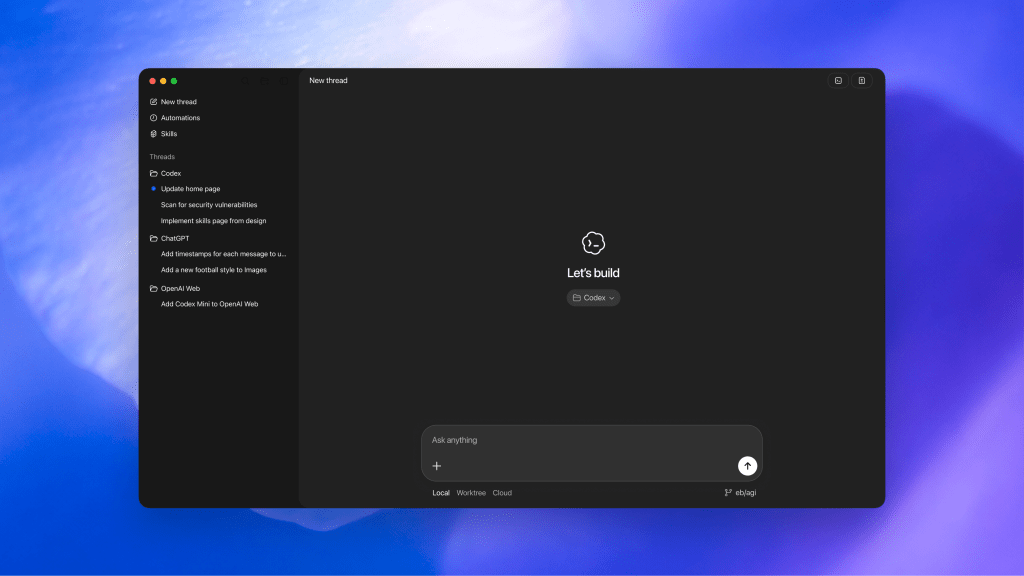
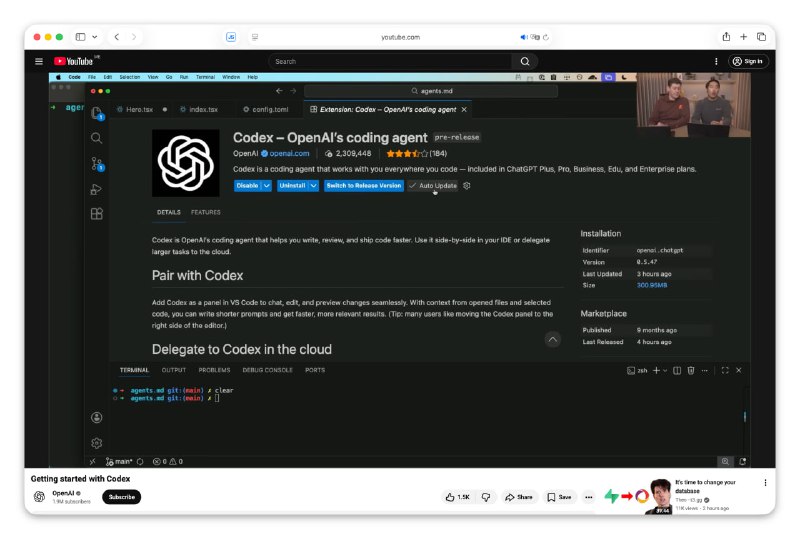
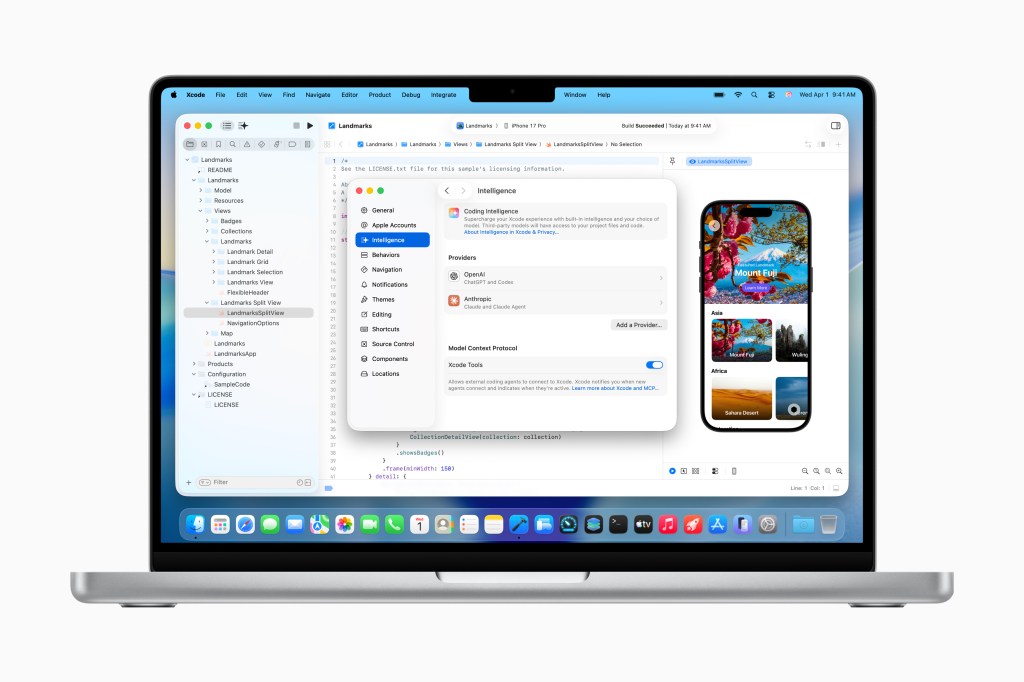
On Monday, OpenAI announced a significant advancement with the release of a native MacOS application for Codex, incorporating many agentic development practices that have gained traction over the past year. The application architecture supports parallel multi-agent execution, integrating agent skills frameworks and other cutting-edge workflows.
This launch follows the recent introduction of GPT-5.2-Codex, OpenAI's most advanced code generation model, positioned to compete directly with Claude Code implementations. "If you really want to do sophisticated work on something complex, 5.2 is the strongest model by far," stated CEO Sam Altman during a press briefing. "However, it's been harder to use, so taking that level of model capability and putting it in a more flexible interface, we think is going to matter quite a bit."
While Altman's confidence in GPT-5.2's capabilities is evident, benchmark evaluations present a more nuanced picture. GPT-5.2 currently leads the TerminalBench leaderboard (measuring AI performance on command-line programming tasks) as of publication. However, agents powered by Gemini 3 and Claude Opus have achieved comparable scores — marginally lower but within the benchmark's margin of error. SWE-bench results, which evaluate AI's capability to resolve real-world software defects, similarly demonstrate no definitive advantage for GPT-5.2.
Nevertheless, agentic use cases remain challenging to benchmark effectively, and state-of-the-art models can exhibit significant variations in user experience.
Key features of the Codex MacOS application include:
• Background automation capabilities — Tasks can be scheduled to execute automatically with results queued for asynchronous review
• Customizable agent personalities — Users can configure agent behavior profiles ranging from pragmatic to empathetic based on workflow preferences
• Rapid development cycles — The platform enables creation of sophisticated software solutions within hours from initial concept
According to Altman, the primary value proposition centers on AI-accelerated development velocity: "You can use this from a clean sheet of paper, brand new, to make a really quite sophisticated piece of software in a few hours. As fast as I can type in new ideas, that is the limit of what can get built."
Sources:
OpenAI Codex GitHub Repository
🔔 Stay tuned and subscribe →
Related news

Try these AI tools
AI Photo converts text prompts into images using Stable Diffusion. Private, offline operation for iO...
Optimize Google Sheets with AiAssistWorks: AI automation, data analysis, and content generation made...

Discover personalized show and movie recommendations with Watchthis.dev, powered by OpenAI and Verce...