Press for navigation
Swipe for navigation

Cebra

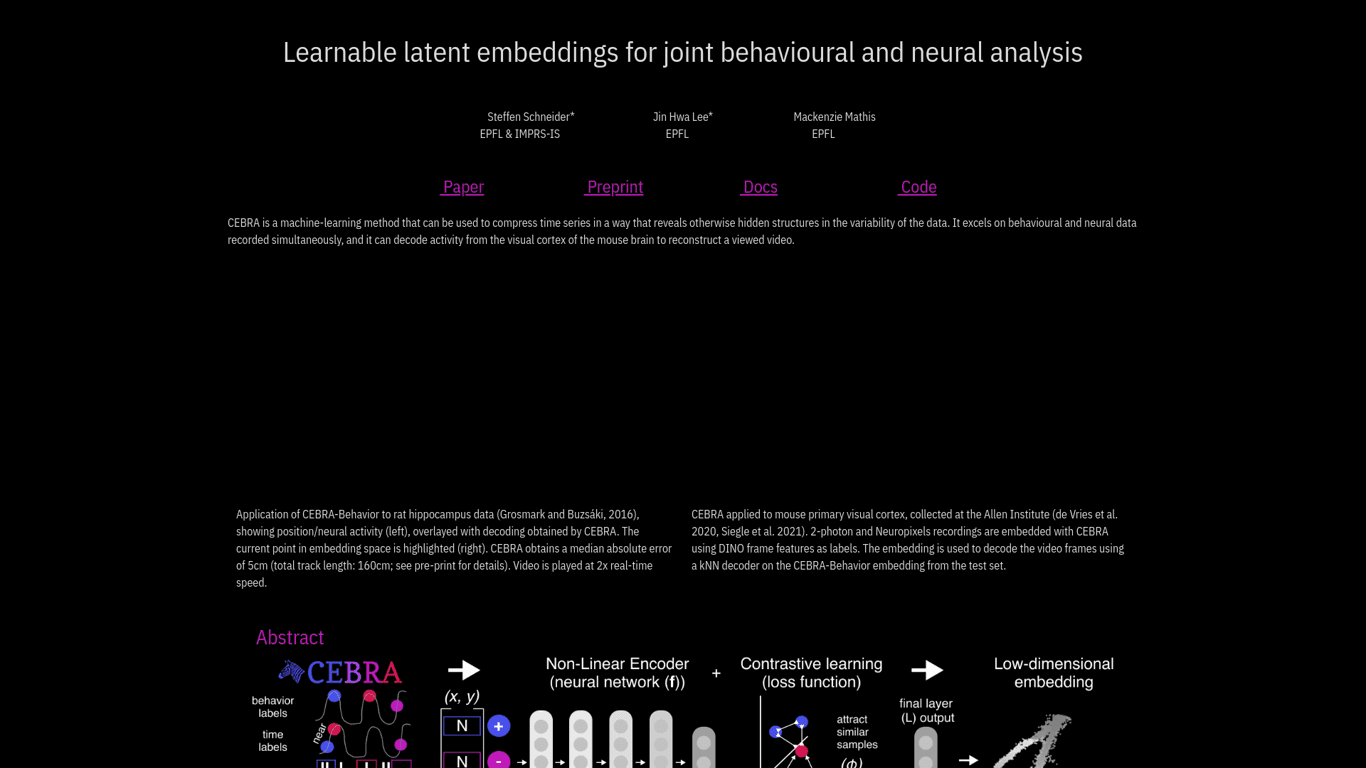
Discover CEBRA: A versatile library for estimating Consistent EmBeddings using high-dimensional data, ideal for biology and neuroscience research.
Natural Language Processing Updated 1 hour ago
Visit Website
Cebra

Cebra's Top Features

Consistent embeddings of high-dimensional recordings
Self-supervised learning algorithms in PyTorch
Integration with popular data analysis libraries
Support for a variety of biology and neuroscience datasets
Multiple installation options (conda, pip, docker)
Open source under Apache 2.0 license
Active development and community contributions
High accuracy and performance in latent space modeling
Comprehensive documentation and usage guides
Support for analyzing both single and multi-session data

Frequently asked questions about Cebra

CEBRA is a library for estimating Consistent EmBeddings of high-dimensional Recordings using Auxiliary variables, primarily for biology and neuroscience datasets.

CEBRA is implemented in Python, utilizing self-supervised learning algorithms in PyTorch.

CEBRA is used for analyzing high-dimensional biological and neural recordings, including compressing time series data to reveal hidden structures in data variability.

CEBRA can be installed using conda, pip, or docker. Please refer to the dedicated Installation Guide on the CEBRA documentation site.

Yes, CEBRA is open source software available under the Apache 2.0 license since version 0.4.0.

Yes, CEBRA offers integrations for libraries like scikit-learn and matplotlib, and supports computing embeddings on DeepLabCut outputs.

CEBRA was initially developed by Steffen Schneider, Jin H. Lee, and Mackenzie Mathis. It is currently maintained by Steffen Schneider, Célia Benquet, and Mackenzie Mathis.

Step-by-step usage instructions for CEBRA are available under the Usage tab on the CEBRA documentation site.

Guidelines for contributing to CEBRA can be found under the Contributing tab on the CEBRA documentation site.

CEBRA supports a variety of datasets commonly used in biological and neuroscience research, including those from the mouse visual cortex and rat hippocampus.

Customer Reviews

Login to leave a review

No reviews yet. Be the first to review!

Top Cebra Alternatives

Text2SQL.AI

Generate SQL queries, Excel formulas, and Regex patterns effortlessly with AI using TEXT2SQL.ai. Sig...

xTuring

Discover xTuring, the open-source AI library for personalizing and fine-tuning Large Language Models...
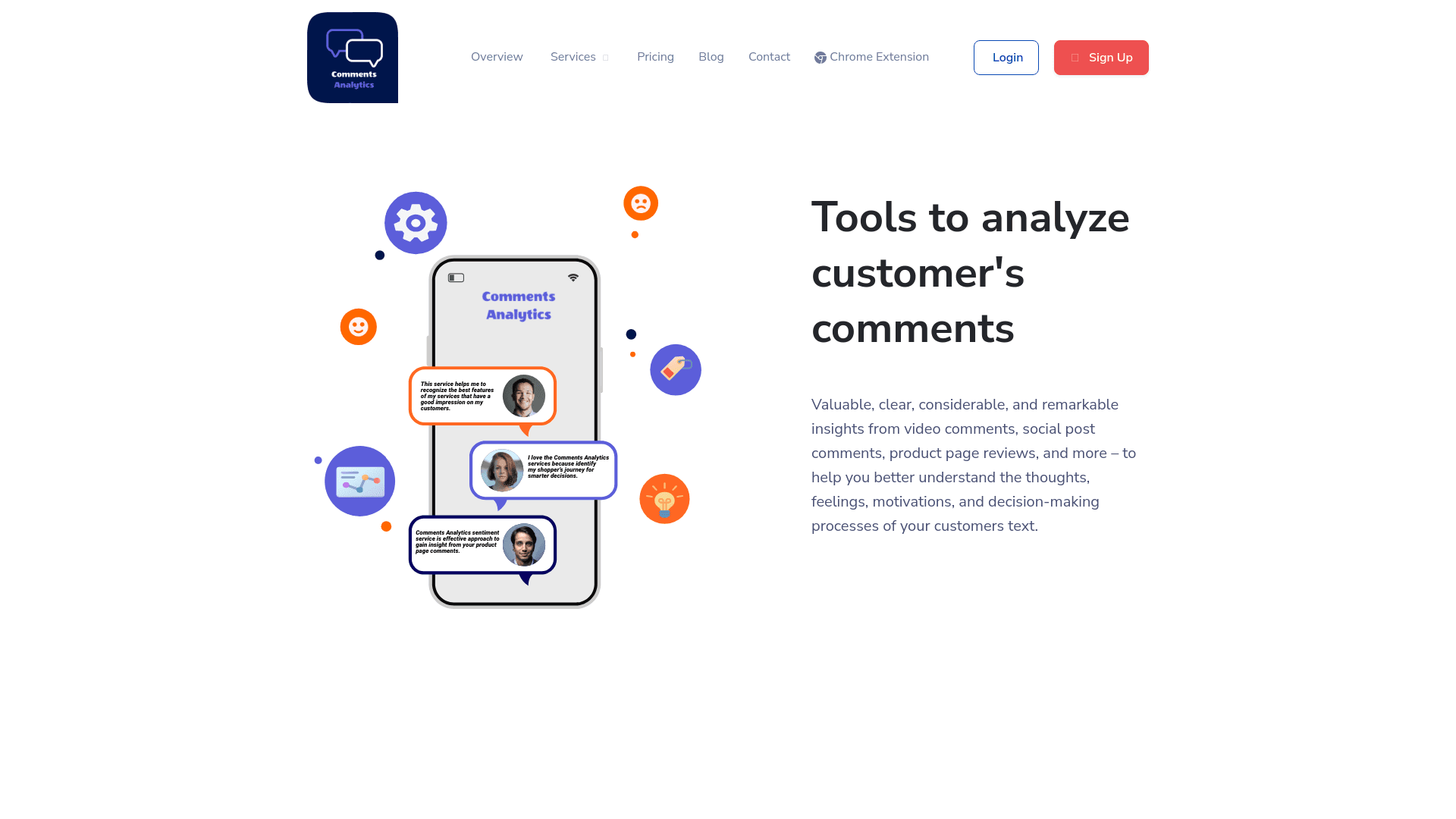
Extracting Comments Insights

Comments Analytics provides services like Sentiment Analysis, Named Entity Recognition, and more to...
Marvin

Marvin is a reliable and scalable toolkit for building natural language interfaces, featuring compre...

Imaginary Programming

Imaginary Programming lets frontend developers leverage AI using OpenAI's GPT, enabling advanced cap...
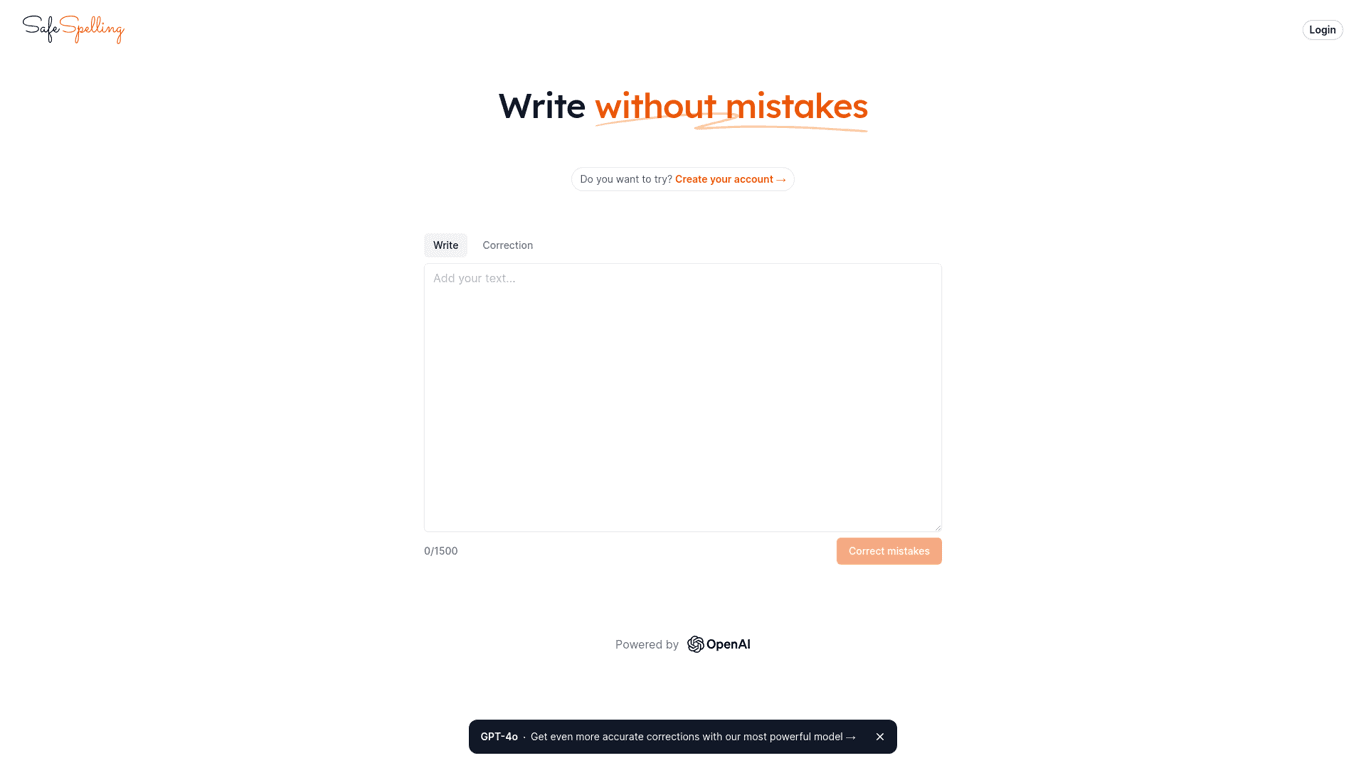
Safespelling

Enhance your writing with SafeSpelling, an AI-powered tool for flawless grammar and spelling correct...

Prev Project
Next Project