Aurora Achieves Superhuman Freight Capability: Autonomous Trucks Complete 1,000-Mile Routes Non-Stop
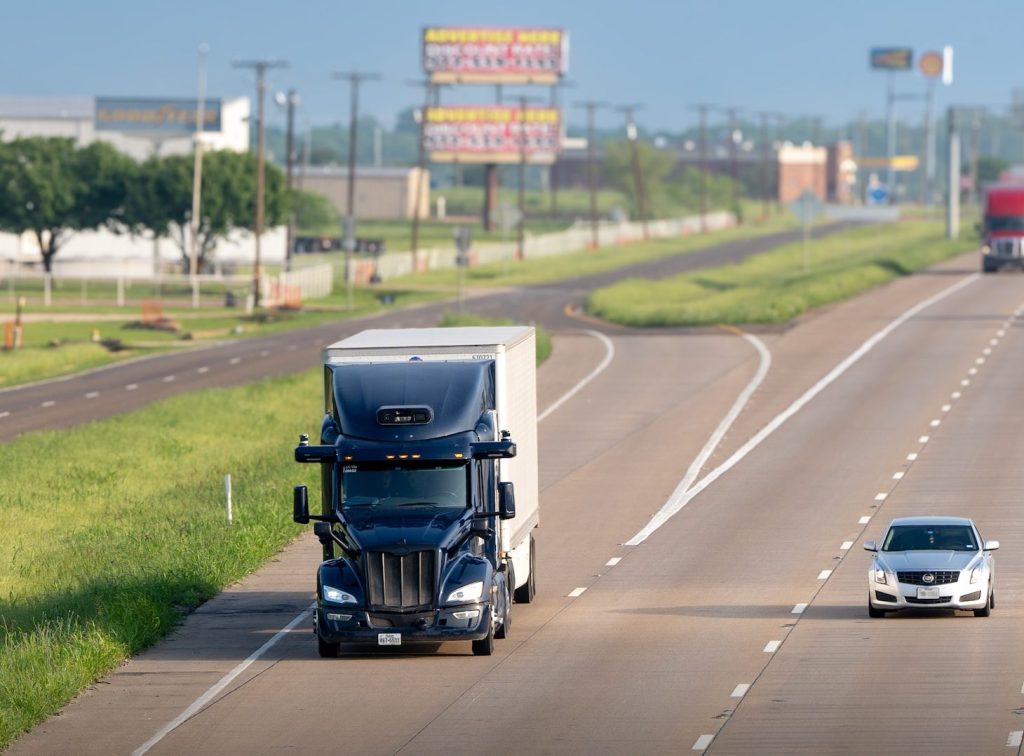
Aurora Innovation has achieved a significant milestone in autonomous trucking operations, with its self-driving semi-trucks now capable of completing non-stop 1,000-mile routes between Fort Worth and Phoenix — a distance that exceeds the legal operational capacity of human drivers under federal regulations.
The company's driverless trucks complete the 1,000-mile freight journey in approximately 15 hours, significantly outperforming human-operated vehicles. Federal Hours of Service (HOS) regulations mandate that truck drivers take a 30-minute break after eight hours of operation and limit continuous driving to a maximum of 11 hours, followed by a mandatory 10-hour rest period. These regulatory constraints substantially extend total transit times for human-operated freight operations.
"This represents more than a technological achievement," stated Aurora co-founder and CEO Chris Urmson during the company's Q4 earnings call. "It is the dawn of a superhuman future for freight."
Commercial Deployment and Revenue Generation
Aurora has successfully transitioned from autonomous vehicle development to commercial operations, generating revenue since April 2025 when it first deployed driverless heavy-duty trucks on public roads. The company reported:
• Q4 2025 revenue: $1 million
• Full year 2025 revenue: $3 million
• Adjusted total year revenue (including pilot programs): $4 million
While revenue figures remain modest compared to operational expenses — Aurora reported a net loss of $816 million in 2025, up 9% year-over-year — the company demonstrates measurable progress from 2024 when no revenue was recognized.
Fleet Expansion and Operational Scale
Aurora currently operates a fleet of 30 trucks, with 10 units operating in fully driverless mode. The company plans to expand its fleet to over 200 trucks by end of 2026. As of January 2026, Aurora's autonomous trucks have accumulated 250,000 driverless miles with a perfect safety record.
Current driverless routes include:
• Dallas to Houston
• Fort Worth to El Paso
• El Paso to Phoenix
• Fort Worth to Phoenix
• Laredo to Dallas
In Q2 2026, Aurora plans to deploy International Motors LT trucks operating without human safety observers — a significant advancement from current Paccar truck operations that maintain human observers per manufacturer requirements.
Technology Advancement and Geographic Expansion
The company has released its fourth software iteration since launching commercial service, with each release validating new operational capabilities:
1. First release: Validated initial driverless operations (Dallas-Houston)
2. Second release: Validated nighttime operations
3. Third release: Validated El Paso operations
4. Fourth release: Enables navigation of diverse geography and climate across the southern United States
Aurora is preparing to expand operations across the Sun Belt region, with planned deployments in Nevada, Oklahoma, Arkansas, Louisiana, Kentucky, Mississippi, Alabama, North Carolina, South Carolina, Georgia, and Florida.
Customer Base and Market Position
Aurora's customer portfolio includes major logistics operators such as Uber Freight, Werner, FedEx, Schneider, and Hirschbach. The company's ability to reduce transit times by nearly 50% presents compelling economic value propositions for freight operators.
"Just as the last two years brought robotaxis into the mainstream, we expect 2026 to mark the inflection point where the market recognizes that self-driving trucks have arrived and are quickly becoming a permanent fixture in our transportation landscape," Urmson stated. "If you're in the Sun Belt in 2026, you won't just read about the Aurora driver. You'll see it every day."
The company anticipates further cost reductions through deployment of its second-generation hardware kit, positioning Aurora for accelerated commercial scaling in the autonomous freight sector.
Sources: