The Economic Reality Check: Why Orbital AI Data Centers Face Brutal Cost Challenges
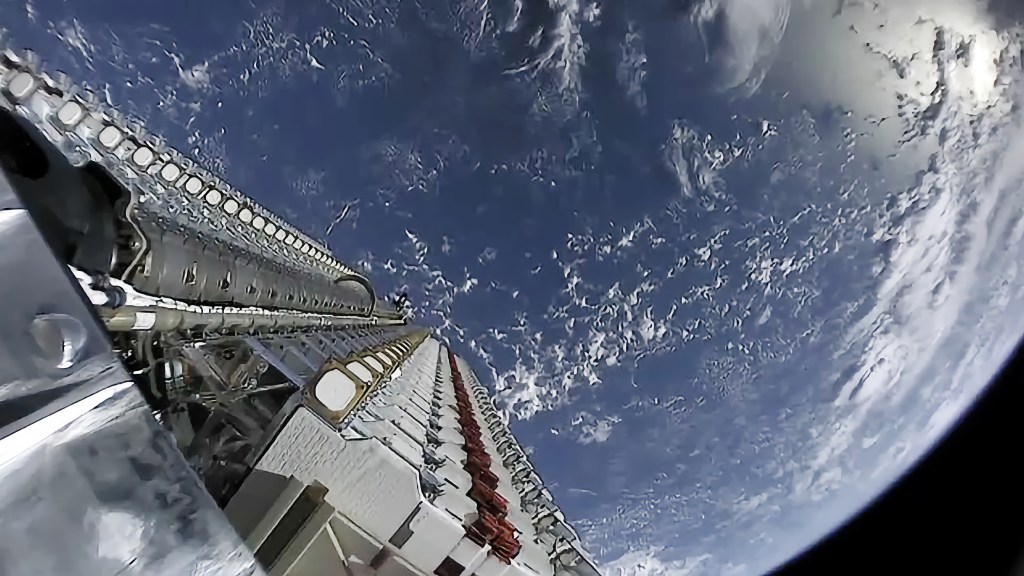
The concept of space-based artificial intelligence infrastructure has transitioned from science fiction to serious business consideration. SpaceX has formally requested regulatory approval to deploy solar-powered orbital data centers across a constellation of up to one million satellites, potentially shifting up to 100 GW of computational capacity off-planet. CEO Elon Musk has publicly stated that space will become the most cost-effective location for AI infrastructure within 36 months.
This ambitious vision extends beyond SpaceX. xAI's head of compute has reportedly wagered with an Anthropic counterpart that 1% of global compute will be orbital by 2028. Google has announced Project Suncatcher, planning prototype vehicle launches in 2027. Starcloud, a startup backed by Google and Andreessen Horowitz with $34 million in funding, filed plans for an 80,000-satellite constellation. Even Jeff Bezos has endorsed this trajectory as the future of computing infrastructure.
The Economic Reality
Despite the enthusiasm, current economic analysis reveals significant challenges. Space engineer Andrew McCalip's comparative calculator demonstrates that a 1 GW orbital data center could cost approximately $42.4 billion—nearly three times the equivalent terrestrial facility, primarily due to satellite manufacturing and launch costs.
Closing this economic gap will require:
• Technological advancement across multiple engineering disciplines
• Massive capital investment
• Development of space-grade component supply chains
• Rising costs for terrestrial alternatives due to resource constraints
Launch Economics and Manufacturing Challenges
The business case for orbital data centers hinges critically on launch cost reduction. SpaceX's current Falcon 9 delivers payload to orbit at approximately $3,600/kg. However, Project Suncatcher's white paper indicates that viable space data center economics require costs closer to $200/kg—an 18-fold improvement expected in the 2030s through SpaceX's Starship vehicle.
Amazon Web Services CEO Matt Gorman acknowledged the challenge: "There are not enough rockets to launch a million satellites yet, so we're pretty far from that. If you think about the cost of getting a payload in space today, it's massive. It is just not economical."
Beyond launch costs, satellite manufacturing presents another hurdle. Current satellite production costs approximately $1,000/kg. While SpaceX has achieved significant economies through Starlink production, AI satellites require substantially more complex systems including large solar arrays, thermal management infrastructure, and laser-based communication links.
Power Economics Comparison
A 2025 Project Suncatcher white paper provides insight into power cost differentials. Terrestrial data centers spend approximately $570–$3,000 per kilowatt annually, depending on local power costs and system efficiency. In contrast, Starlink satellites currently deliver energy at $14,700 per kilowatt annually when factoring in acquisition, launch, and maintenance costs.
Space Environment Constraints
Thermal management in space, often described as "free," actually presents unique challenges. Without atmospheric convection, heat dissipation requires large radiator surface area and mass. Mike Safyan, an executive at Planet Labs building prototype satellites for Google Suncatcher, identifies this as "one of the key challenges, especially long term."
Additional environmental factors include:
• Cosmic radiation: Degrades chips over time and causes bit-flip errors requiring expensive shielding or rad-hardened components
• Solar panel degradation: Silicon-based panels degrade rapidly in space radiation, limiting satellite operational lifetime to approximately five years
• Vacuum conditions: Require alternative thermal management approaches compared to terrestrial facilities
Architectural Considerations and Use Cases
The application profile for orbital data centers remains under development. Model training typically requires thousands of GPUs operating in unison within individual data centers. Google's terrestrial TPU networks achieve hundreds of gigabits per second throughput, while current off-the-shelf inter-satellite laser communications reach only approximately 100 Gbps.
Project Suncatcher proposes an innovative architecture: 81 satellites flying in tight formation to enable terrestrial-grade transceiver use. This approach introduces autonomous station-keeping challenges, particularly for debris avoidance.
Inference workloads present a more viable initial use case, requiring fewer GPUs and tolerating higher latency. Starcloud CEO Philip Johnston suggests: "I think almost all inference workloads will be done in space," envisioning applications from customer service agents to ChatGPT queries computed in orbit. The company claims its first AI satellite is already generating revenue performing orbital inference.
SpaceX's Strategic Position
SpaceX's orbital data center constellation filing indicates approximately 100 kW of compute power per satellite—roughly double current Starlink capacity. The spacecraft will interconnect using the Starlink network, with claims of petabit-level throughput via laser links.
The company's acquisition of xAI positions SpaceX uniquely across both terrestrial and orbital data center markets, enabling flexible capital allocation based on supply chain development rates. As McCalip notes: "A FLOP is a FLOP, it doesn't matter where it lives. [SpaceX] can just scale until [it] hits permitting or capex bottlenecks on the ground, and then fall back to [their] space deployments."
Sources:
New York Times - Lunar Factory Report
Space Data Center Cost Calculator
Project Suncatcher White Paper (2025)