Fibr AI Secures $5.7M Series A to Transform Static Websites into AI-Powered Personalized Experiences
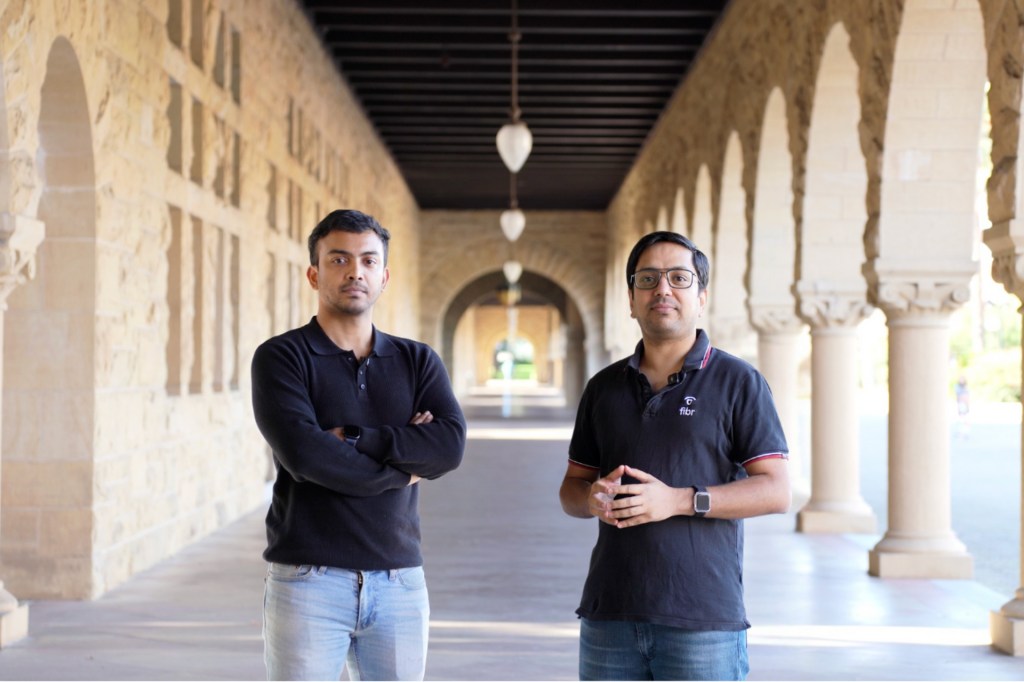
Fibr AI, a startup leveraging autonomous AI agents to deliver personalized website experiences, has raised $5.7 million in seed funding led by Accel, following a $1.8 million pre-seed round in 2024. The investment round also saw participation from WillowTree Ventures and MVP Ventures, along with Fortune 100 operators joining as angel investors and advisors, bringing total funding to $7.5 million.
While digital advertising has evolved to deliver hyper-personalized targeting, website landing pages have remained largely static and generic. Fibr AI addresses this disconnect by deploying AI agents that dynamically personalize web experiences in real-time, tailoring content to individual visitor intent and context.
Traditional enterprise personalization relies on a combination of legacy software platforms, in-house engineering resources, and marketing agencies—a model that is resource-intensive, slow to iterate, and difficult to scale. While advertising campaigns can be adjusted instantly for different audience segments, modifying website experiences typically requires weeks of coordination across teams and limits organizations to running only a handful of A/B tests annually.
Fibr AI fundamentally reimagines this operational model. According to co-founder and CEO Ankur Goyal, the platform replaces human-dependent workflows with autonomous AI systems that operate continuously. "We are the software, and the agency is the workforce of agents we are deploying," Goyal explained. This architecture enables the platform to execute thousands of parallel experiments rather than the few dozen typical of traditional approaches.
Founded in early 2023 by Goyal and Pritam Roy, Fibr AI experienced slow initial traction, maintaining only one or two enterprise clients during its first two years as large organizations evaluated the technology. Adoption accelerated significantly in recent months, particularly among regulated industries including financial services and healthcare, bringing the customer base to 12 enterprises.
"We are an infrastructure afterthought layer," Goyal noted. "Once it's set up, nobody wants to think about it again." This positioning has enabled Fibr AI to secure three- to five-year contracts with large enterprises that treat website infrastructure as a standardized component rather than a continuously managed system.
Technical Architecture and Approach
Fibr AI functions as an abstraction layer deployed on top of existing website infrastructure. The platform integrates with enterprise advertising platforms, analytics systems, and customer data platforms (CDPs) to understand visitor context, intent signals, and traffic sources. Its AI agents then dynamically assemble and optimize page elements—including copy, imagery, layout, and calls-to-action—treating each URL as a continuously learning system rather than a static resource.
Unlike traditional rule-based personalization engines or sequential A/B testing frameworks, Fibr AI executes large-scale parallel micro-experiments, systematically updating experiences based on real-time traffic patterns and conversion signals across multiple channels.
This architectural shift has direct implications for enterprise cost structures. Conventional website personalization typically combines software licensing fees with agency retainers and engineering overhead, tying costs to headcount rather than business outcomes. Goyal indicated that enterprises are increasingly evaluating the platform based on cost-per-experiment metrics and conversion impact rather than tooling complexity or staffing requirements.
Investment Rationale and Market Positioning
For Accel, the decision to double down on Fibr AI centered on the operational transformation rather than AI hype. "Advertising today is one-to-one, but when users land on a website it becomes one-to-many," said Prayank Swaroop, Partner at Accel. "You can create hundreds of ads for different audiences, but they all still land on the same page."
Fibr AI's ability to eliminate agency and engineering bottlenecks while enabling true one-to-one personalization at scale was a key differentiator. Early adoption among highly regulated industries—financial services and healthcare—provided validation of the value proposition. "These are regulated, conservative industries," Swaroop noted. "When they start saying, 'We need this, and we're willing to pay for it,' that's when we feel confident doubling down."
Preparing for Agentic Commerce
While current revenue is driven by personalizing experiences for human visitors, both Accel and Fibr AI recognize emerging opportunities in AI-mediated discovery. As users increasingly leverage large language models (LLMs) and AI assistants like ChatGPT for product research and comparison before visiting websites, the ability to adapt experiences based on what a visitor—or an AI agent acting on their behalf—already knows could become strategically important.
"That part is still early," Swaroop acknowledged, "but the companies building for today's needs while being ready for that shift tomorrow are the ones we want to back."
Growth Strategy and Market Competition
With the new capital, Fibr AI plans to expand its go-to-market and customer success teams in the United States while maintaining its engineering hub in India. The San Francisco-headquartered company operates an office in Bengaluru, with 17 of approximately 23 employees based in India and six in the U.S.
Goyal projects the company will reach approximately $5 million in annual recurring revenue (ARR) and scale to around 50 enterprise customers by year-end.
Fibr AI competes in a market long dominated by incumbents such as Adobe and Optimizely, which provide experimentation and personalization platforms to large enterprises. However, both Goyal and Swaroop argue these legacy solutions are constrained by their architecture and go-to-market models, typically requiring marketing agencies and engineering teams to configure and operate them—limiting agility and experimentation velocity even as customer acquisition channels have become increasingly dynamic.
"Incumbents have been slow in bringing out products," Swaroop observed, adding that even when new capabilities are released, they often lag market demand by years.
🔔 Stay tuned and subscribe →
Related news




Try these AI tools
UBOS is a versatile development platform offering AI-driven, low-code/no-code solutions for startups...
Discover SocialHub AI, the leading marketing cloud platform integrating AI, Web3, and Cloud-Native t...
Torq AI revolutionizes security operations with AI-driven hyperautomation for efficient threat manag...