Carbon Robotics Unveils Large Plant Model: Revolutionary AI for Real-Time Weed Recognition in Autonomous Agriculture
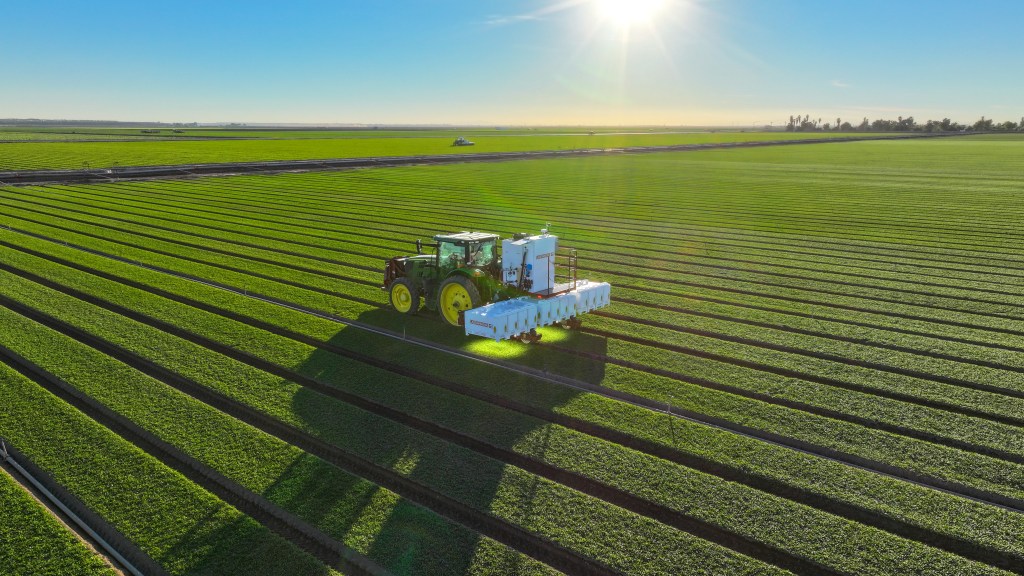
Carbon Robotics, a Seattle-based agricultural technology company specializing in autonomous laser-based weed elimination systems, has announced the release of its Large Plant Model (LPM) — an advanced AI system capable of instantaneous plant species identification without requiring model retraining.
The LPM powers the company's LaserWeeder autonomous robot fleet, which operates across more than 100 farms in 15 countries. The model has been trained on an extensive dataset comprising over 150 million images and data points collected from real-world agricultural deployments, enabling unprecedented accuracy in plant recognition and classification.
Eliminating Retraining Bottlenecks
According to Paul Mikesell, founder and CEO of Carbon Robotics, the previous iteration of their AI system required approximately 24 hours of retraining each time a new weed species appeared or when existing species exhibited variations due to different soil conditions or growth stages. This process involved creating new data labels and retraining the neural network from scratch.
The LPM architecture fundamentally changes this paradigm. The model can now recognize and classify previously unseen plant species in real-time, allowing farmers to designate new targets for elimination through the robot's user interface without any backend retraining procedures.
"The farmer can operate in real-time and designate new weed species for elimination on-the-fly," Mikesell explained. "The Large Plant Model possesses a deeper understanding of plant morphology and taxonomy, eliminating the need for additional labeling or retraining cycles."
Technical Foundation and Development
Carbon Robotics, established in 2018, initiated LPM development shortly after deploying its first commercial units in 2022. Mikesell brings extensive experience in neural network architecture from previous roles at Uber and Meta, where he contributed to Oculus virtual reality headset development.
The LPM will be deployed to existing LaserWeeder systems via over-the-air software updates. Farmers can configure elimination and protection parameters by selecting images captured by the robots through an intuitive user interface.
Funding and Future Development
The company has secured over $185 million in venture capital from prominent investors including Nvidia NVentures, Bond, and Anthos Capital. With a training dataset now exceeding 150 million labeled plant specimens, Carbon Robotics plans to continue refining the LPM through continuous data collection from its deployed fleet.
"Our dataset has reached a scale where the model can analyze any plant image and determine its species, taxonomic relationships, and structural characteristics — even for specimens it has never encountered before," Mikesell noted. "The neural network's depth of training data enables this level of generalization."
This advancement represents a significant milestone in precision agriculture, demonstrating how large-scale AI models can address real-world operational challenges in autonomous farming systems.
🔔 Stay tuned and subscribe →
Related news




Try these AI tools

Amazon SageMaker offers comprehensive tools to streamline building, training, and deploying machine...

Create unique, high-quality music effortlessly with AI-driven Musick.ai. Explore diverse genres with...

Aidaptive's eCommerce AI Platform optimizes conversion rates through predictive, automatic personali...