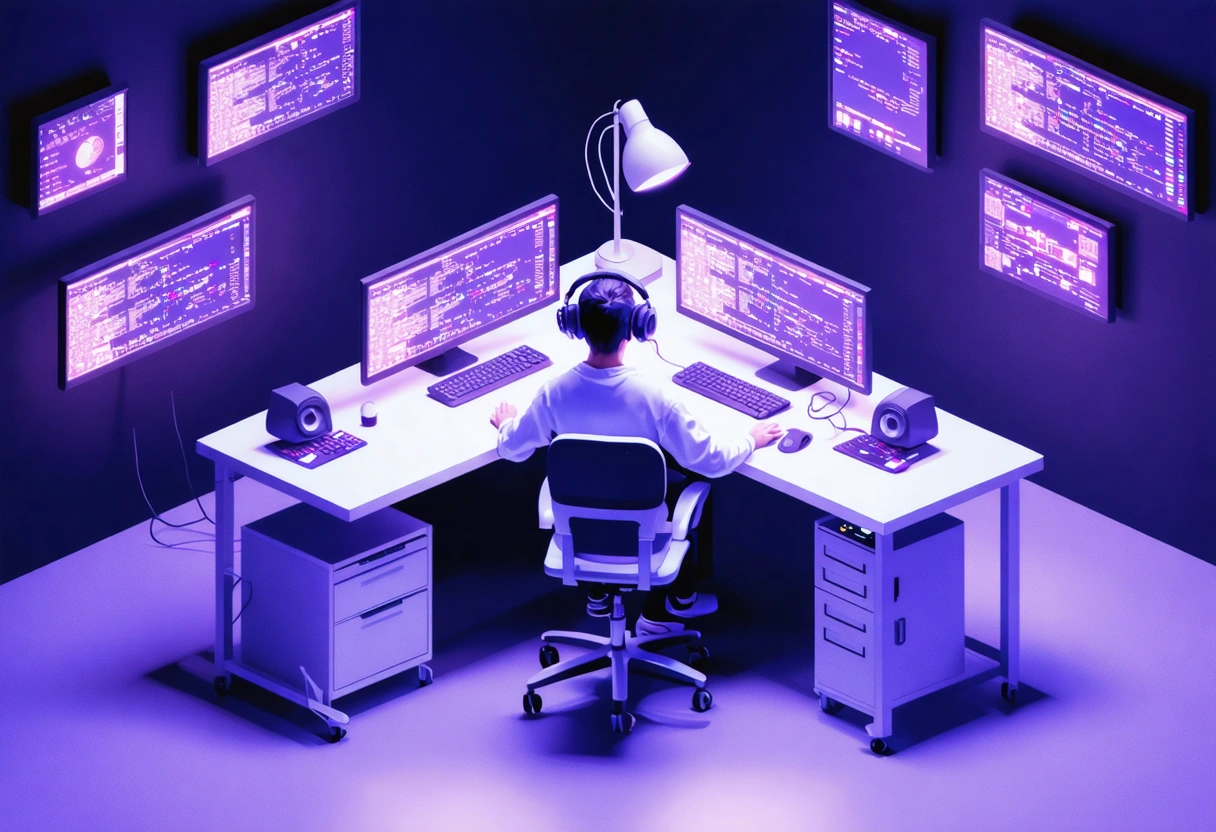

🧘♂️ Vibe Coding: Revolutionizing Developer Workflow in the Modern Era
In my decade of running an IT company, I noticed something critical: developer productivity isn't just about technical skills or time management—it's deeply influenced by environment and mental state. This concept, now gaining traction as "vibe coding," has transformed how programmers approach their work.
Just like I couldn't take a day off without thinking about my business, developers often struggle to find that perfect mental space for coding. The right vibe—combining mood, atmosphere, and psychological state—helps tap into deeper flow states that completely transform problem-solving and creativity.
🧠 The Science of Flow State in Development
When I work with business clients on automation, I always emphasize understanding the underlying psychology of productivity. The flow state concept, pioneered by psychologist Mihaly Csikszentmihalyi, describes that sweet spot where developers become fully immersed in their coding tasks.
Flow state characteristics include:
- Deep, focused concentration on the present task
- A sense of control and mastery
- Clear goals with immediate feedback
- Perfect balance between challenge and skill
- Distorted time perception (hours passing like minutes)
Just as I help entrepreneurs visualize their business processes, vibe coding helps developers visualize their optimal working conditions. It's not automatic—it depends on crafting the right environment and mindset.
🏢 How Your Environment Shapes Coding Productivity
From my experience helping businesses automate workflows, I've seen firsthand how environment dramatically impacts output quality. Traditional office settings often fail to address individual differences in how developers respond to their surroundings.
Key environmental factors affecting developer workflow include:
- Lighting: Natural light boosts mood and focus, while poor lighting increases eye strain and fatigue. Adjustable ambient lighting tailored to coding tasks improves concentration.
- Sound management: Some developers thrive with background music, while others need silence. Providing options like noise-canceling headphones creates personalized sound environments.
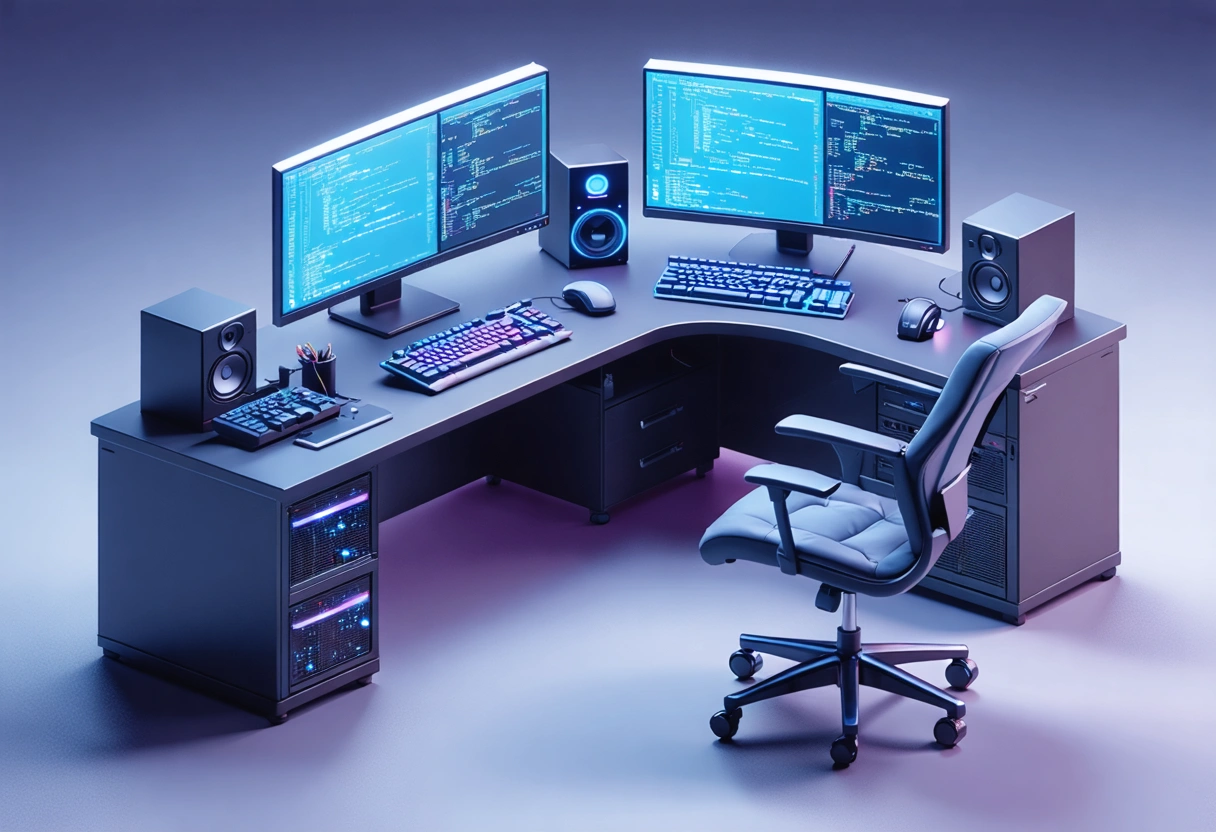
- Ergonomic setup: Comfortable seating and adjustable desks reduce physical distractions and support sustained attention during long coding sessions.
- Organization: A tidy workspace correlates with mental clarity—reducing cognitive overload and supporting efficient task switching.
- Personalization: Allowing developers to customize their space with plants or meaningful objects creates emotional comfort and ownership.
- Digital environment: Even code editor themes and keyboard shortcuts influence satisfaction and speed, completing the vibe coding ecosystem.
When I help entrepreneurs eliminate routine tasks through automation, I'm essentially doing what vibe coding does for developers—creating space for deeper, more meaningful work by removing friction.
😌 The Emotional Components of Effective Coding
Just as entrepreneurs constantly juggle thousands of responsibilities to customers, employees, and family, developers must manage their emotional state to maintain productivity. Positive emotions enhance cognitive flexibility and problem-solving, while negative emotions impede attention and learning.
Developers can integrate mood-enhancing habits into their workflow:
- Mindfulness practices: Brief meditation exercises reduce stress and reset mental focus
- Curated audio environments: Carefully selected playlists or ambient sounds regulate emotional states
- Strategic breaks: Regular movement prevents burnout and refreshes cognitive resources
- Micro-achievements: Breaking tasks into smaller goals creates constant sense of progress
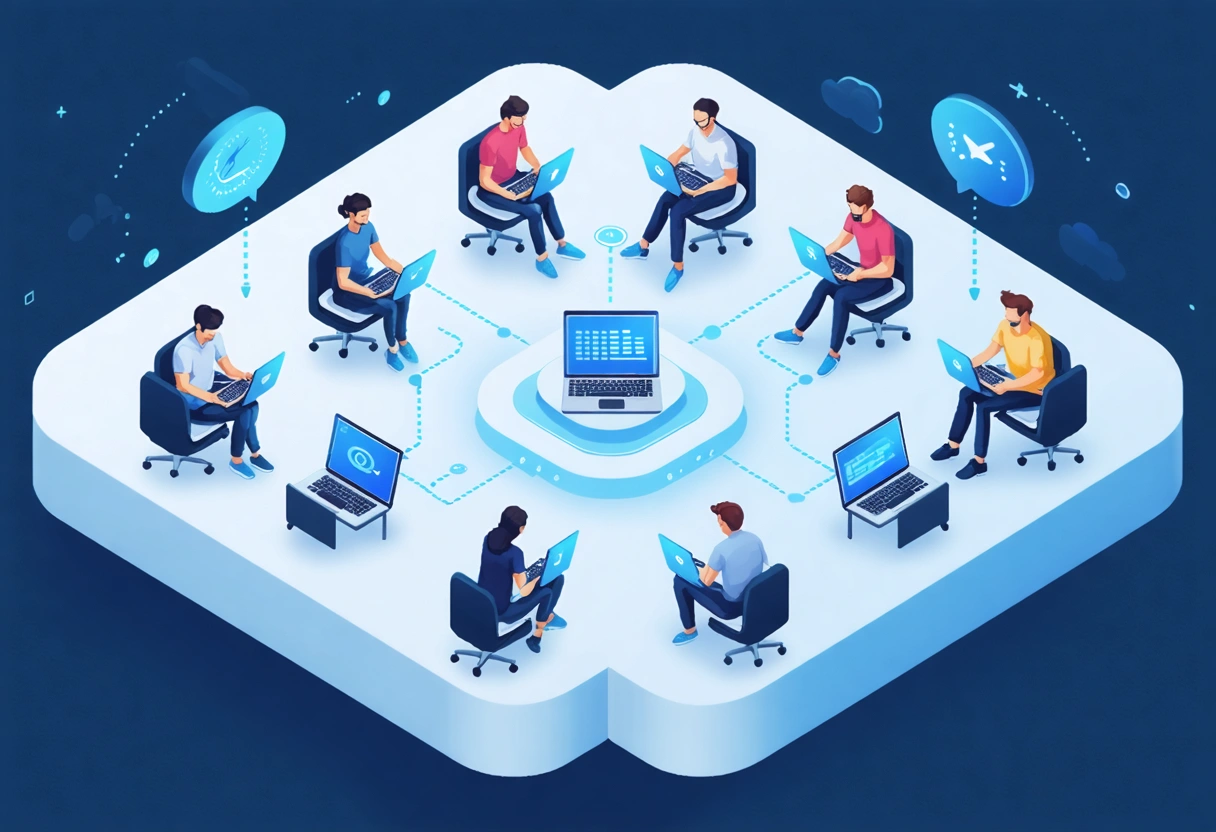
- Community interaction: Positive social connections reduce isolation and stimulate learning
Like I often tell business owners: work is only part of life, not 100% of it. Modern luxury isn't a cool car or exotic vacation—it's having the freedom to pay attention to your primary needs at any time.
🔄 Transforming Developer Workflow with Vibe Coding
The traditional developer workflow often revolves around rigid schedules and task lists, much like how entrepreneurs get stuck answering the same employee questions repeatedly despite having regulations in place. Vibe coding breaks this pattern with a flexible approach that responds to emotional and environmental cues:
- Flexible scheduling: Working during peak mental energy times enhances flow state occurrence
- Location flexibility: Remote or hybrid models allow developers to choose their optimal environment
- Task variety: Rotating challenges prevents boredom while maintaining engagement
- Pre-coding rituals: Simple routines signal the brain to enter focus mode
- Smart environment tech: Adjustable lighting, productivity apps, and ambient noise generators create feedback loops for optimal vibes
Companies embracing these principles see higher satisfaction, retention, and quality—proving that this approach benefits both individuals and organizations.
💼 Real-World Vibe Coding Success Stories
Through my work with various businesses on automation, I've witnessed transformations similar to these vibe coding implementations:
- Company A created flexible spaces with natural plants and lighting, resulting in 20% more completed feature cycles per quarter
- Company B provided personalized work kits with noise-canceling headphones and customizable lighting, reducing coding errors by 15%
- Remote team C adopted daily group mindfulness practices before sprints, achieving smoother collaboration and faster debugging
These examples mirror what I've seen in business automation—when you optimize the environment and remove friction, productivity naturally increases.
🚀 Optimizing Your Personal Coding Vibe
For developers looking to implement vibe coding in their workflow, here are actionable steps I recommend:
- Design your ideal space: Create a dedicated, distraction-free area with adjustable lighting and ergonomic furniture
- Curate your soundscape: Experiment with background sounds that elevate focus using apps like Noisli or Brain.fm
- Establish meaningful rituals: Develop pre-coding routines like deep breathing or short walks
- Set clear, achievable goals: Break tasks into small milestones and visualize progress
- Track your mood patterns: Monitor emotional states and adjust workloads accordingly
- Use supportive technology: Implement tools that reduce cognitive load and maintain workflow
- Communicate boundaries: Advocate for your ideal working conditions, whether quiet hours or flexible scheduling
By understanding the connection between environment, mood, and productivity, developers can transform coding from mere task completion into an immersive, fulfilling experience.
🔮 The Future of Development Productivity
As someone deeply involved in business automation, I see vibe coding as part of a larger shift toward more humane, sustainable workflows. The software industry increasingly recognizes that human factors—mood, environment, and mental well-being—are as crucial as technical efficiency.
Emerging technologies now support this approach, from AI-driven mood tracking to smart offices that respond to physiological indicators. Organizations adopting flexible policies and mental health awareness reflect the vibe coding philosophy, creating cultures of sustainable performance.
Full involvement in work processes without delegation and attention to environment is a direct path to burnout—something I experienced firsthand during my years running an IT company. Vibe coding offers developers a way to achieve harmony between mind, environment, and workflow that elevates programming from mere task completion to an art form.
For entrepreneurs and developers alike, the message is clear: productivity isn't just about working harder—it's about creating the right conditions for your mind to work at its best. That's the true power of vibe coding in transforming developer workflow.